As the helicopter rises from the tarmac with a whir of chopper blades on a voggy Kona morning, I watch the airport pavement’s fine details transition from a chunky rock conglomeration to a distant grey strip. Instead of navigating over the familiar island-bisecting Saddle Road that connects Kona and Hilo, our cheerful Paradise Helicopters pilot puts on a party playlist and maneuvered us between the summits of Hualālai and Mauna Loa Volcanoes. We are well beyond the convenience of roads. “Have you ever seen this part of the island?” Our pilot asks through his bulky headset. “No,” I reply, as I scan the terrain for trails I might return to later. “Never.”
The sense of scale from on high is remarkable—as we move east, I see the transitions in the landscape. Coastal deserts become cloud forests and then treeless mountaintops like an ombré dip-dye. Over Mauna Loa’s hump, we find Kīlauea. Pocked with cinder cones and streaked with recent flows, the islands’ only presently active volcano belches white plumes from its summit crater eruption. Our pilot makes several S-turns so all the passengers can see its orange glow—it is like living in a postcard.
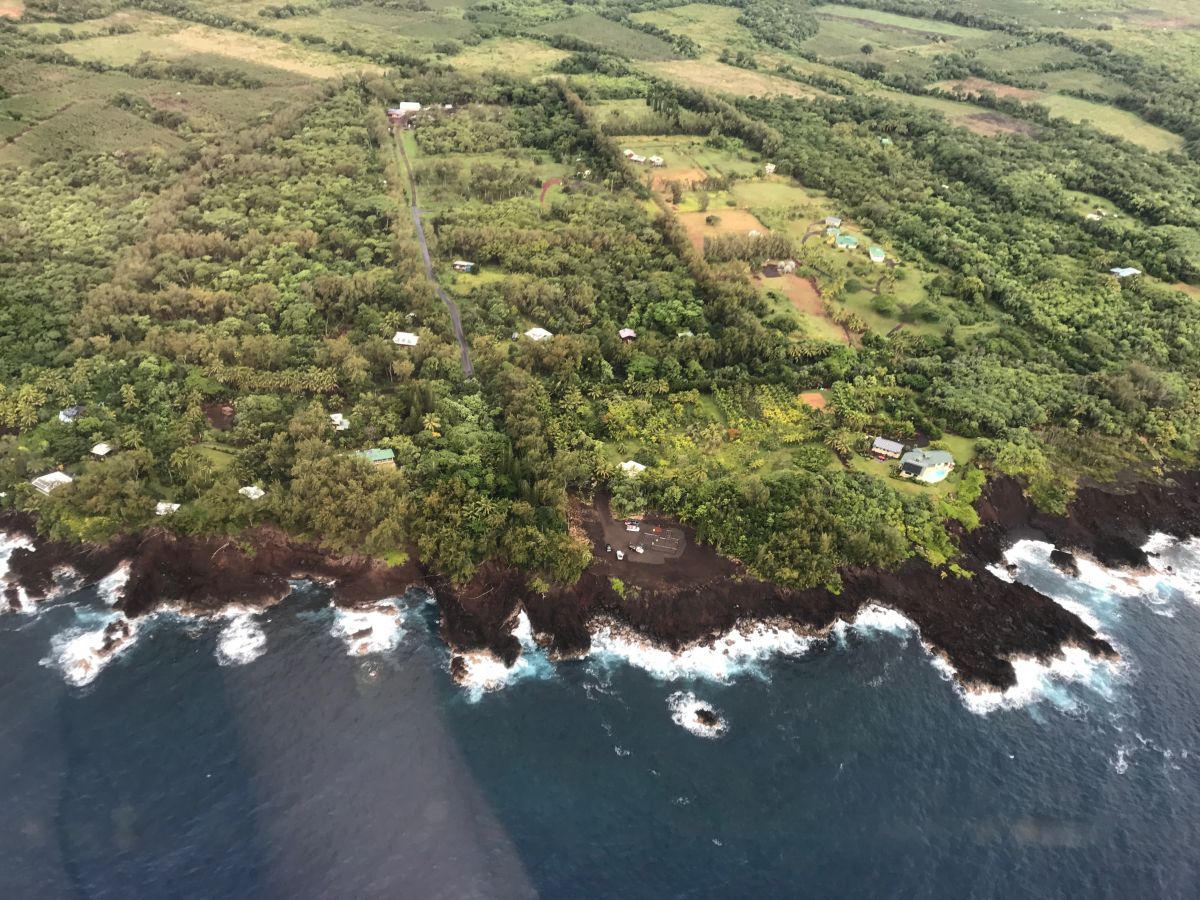
Photo: Meghan Miner Murray
We zip toward the ocean. A slivery lava flow stands out from the black lava desert, and streams down a ledge, hitting the seawater in a fit of steam. I want to hear the hiss as I watch the island grow, but all I can hear is the whir of chopper blades. One of the other passengers asks, half-jokingly, if we can land, but our pilot moves us on past black sand beaches, inland pools and palm-dotted coastline to our landing spot in rainy Hilo.
There, we load into a white van and transition from passive observers to active participants. Our knowledgeable Kauaʻi-born Hawaiʻi Forest & Trail guide drives us to Hawaiʻi Volcanoes National Park to experience Halemaʻumaʻu Crater up close—smelling the sulfur and holding lightweight cinder projectiles in our palms. We walk through the dark and dripping Nāhuku (Thurston) Lava Tube and marvel at the ʻōhiʻa tree roots that penetrate its ceiling.
Back on the road, heading toward the southerly Kaʻū district, details are a sensory overload: From this vantage we can see roof tiles on houses, items in storefronts and individual trees in vast agricultural plots. We stop several times to immerse ourselves, touching warm, red coffee cherries on the bush and sipping the roasted results, and wandering barefoot through the hot sands of the Punaluʻu Black Sand Beach. There, I take my time, feeling the sea spray on my face while scanning for tiny honu (sea turtle) heads surfacing for breath between the waves.

Photo courtesy: Paradise Helicopters
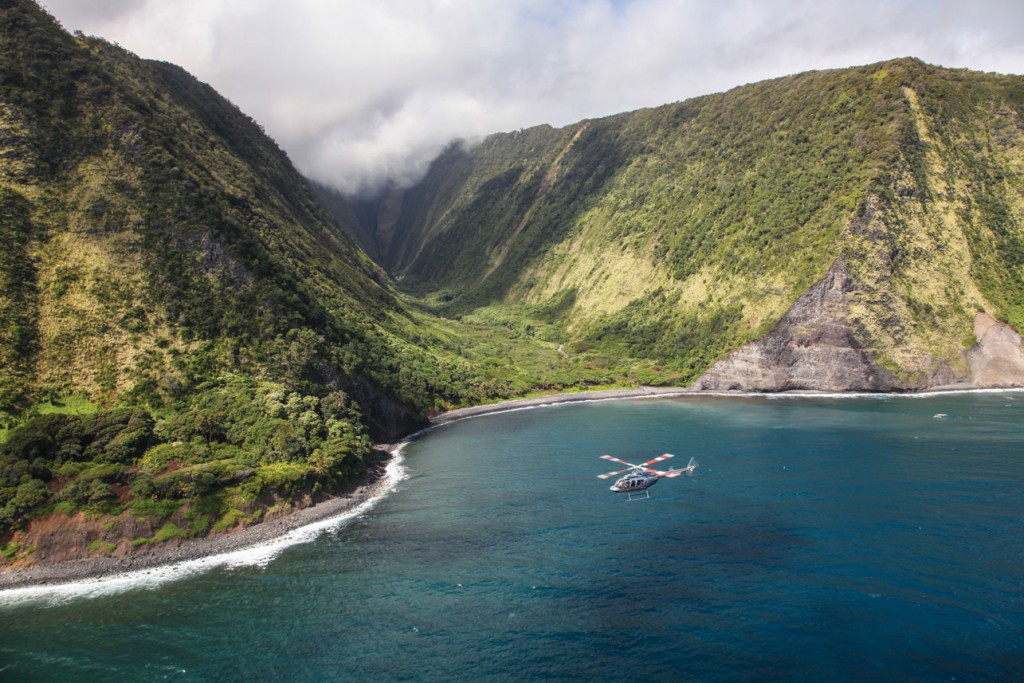
As the day wears on, we head back to the airport and the chopper for the grand finale—a cinematic jaunt north up the Hāmākua Coast, buzzing the tree line and skimming past a multitude of gushing waterfalls. The helicopter turns sharply inland at Waimanu Valley. Towering green walls block the sunlight, and I feel the enormity of the valley compared to our tiny helicopter. Our pilot hovers over four waterfalls ranging in height from 1,000 to 2,000 feet that are so immense, I have to look down through the glass beneath my feet and look up between the rotating blades to see them in their entirety.
We dart out pass vivid cow pastures and flocks of white egrets sailing through the golden afternoon sky in Waimea, and down over the resorts fronting coral shelves through the clear, turquoise waters of the Kona Coast. It is over in a blur.
Landing at the airport, I couldn’t imagine spending 11 hours and seeing that much anywhere else. “What did you think?” asks our pilot.
Dumbstruck, all I can muster is: “Wow!”