The waters surrounding the Hawaiian Islands are home to an incredible array of marine life, from vibrant schools of fish to playful dolphins and magnificent manta rays. Whether you’re snorkeling, surfing or relaxing on the beach, you may encounter some of Hawaiʻi’s marine wildlife. For their protection and your safety, always observe wildlife respectfully and keep your distance
1. Honu – Hawaiian Green Sea Turtles
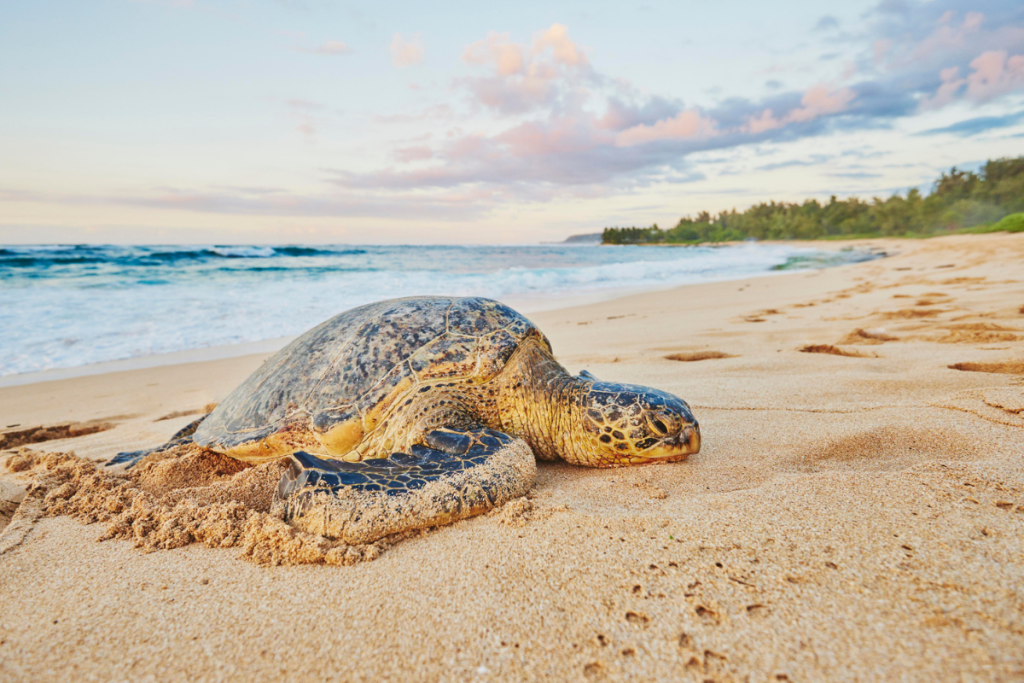
Photo: Getty Images/ imageBROKER/David & Micha Sheldon
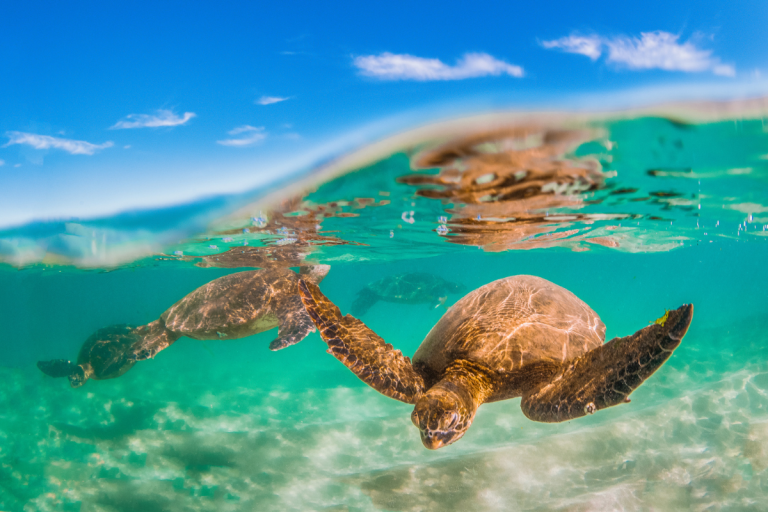
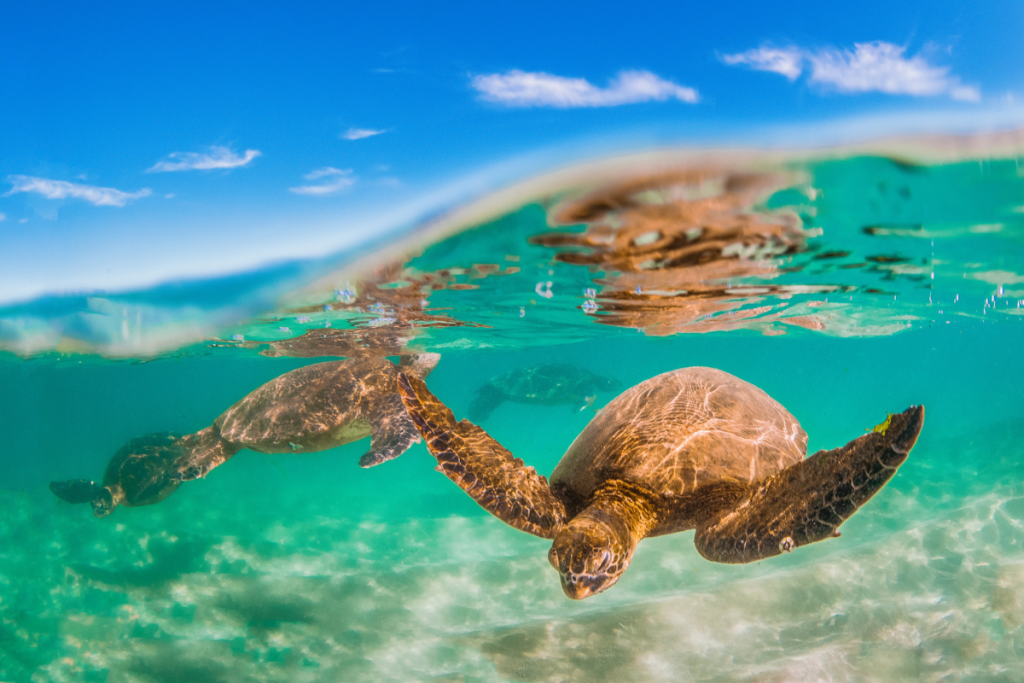
The Hawaiian green sea turtle, or honu, is one of the most commonly spotted marine animals in Hawaiʻi. These beloved and gentle creatures can grow up to 4 feet long and weigh more than 300 pounds.
Honu are protected under both state and federal law, so be sure to give them plenty of space whether they are swimming offshore or resting on the beach.
2. Humuhumunukunukuāpuaʻa- Reef Triggerfish
Hawaiʻi’s state fish is the humuhumunukunukuāpuaʻa, or reef triggerfish, a species commonly spotted while snorkeling around the Islands. But it’s just one of the many fish that inhabit Hawaiʻi’s waters.
The bright yellow tang (Zebrasoma flavescens) is another common sight above coral reefs on Maui and Hawaiʻi Island. Another recognizable reef fish is the uhu, or parrotfish, known for its vibrant colors and distinctive beak-like mouth.
3. ‘Īlioholoikauaua – Hawaiian Monk Seals
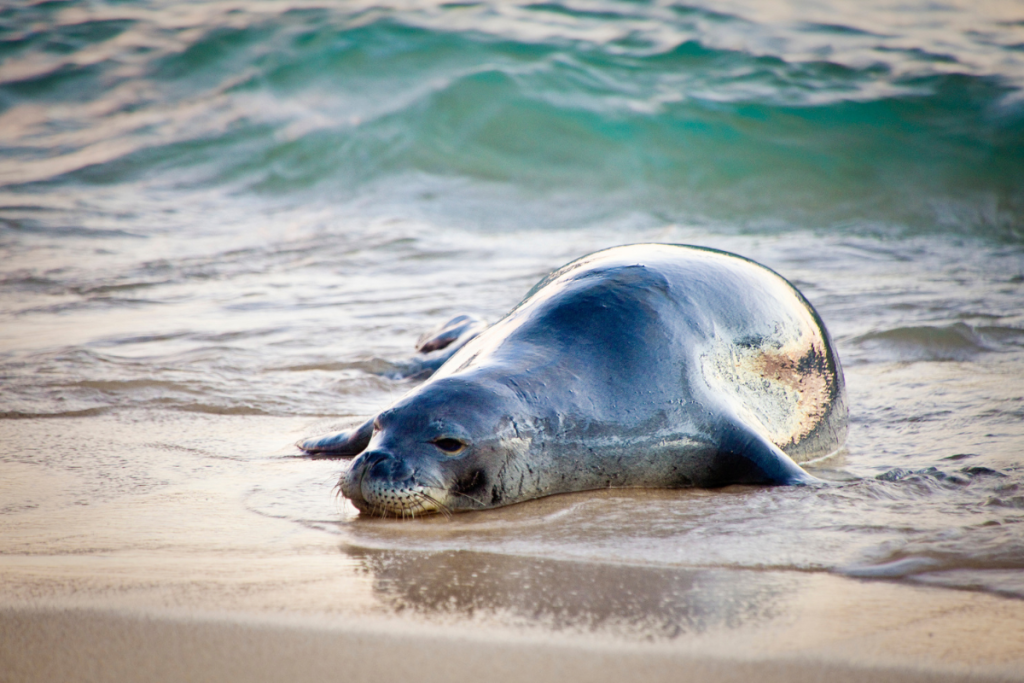
Photo: Getty Images/ YinYang
Hawaiian monk seals are among the most endangered marine mammals in the world, protected under the Endangered Species Act. Today, the population is estimated at roughly 1,500 to 1,600.
These marine mammals are endemic to Hawaiʻi and are known by a few names, including ‘Īlioholoikauaua, which roughly translates to “dog running in rough seas,” and īliokai, meaning “sea dog.”
READ MORE: 5 Things About the Hawaiian Monk Seal You Need to Know
4. Hāhālua – Manta Rays
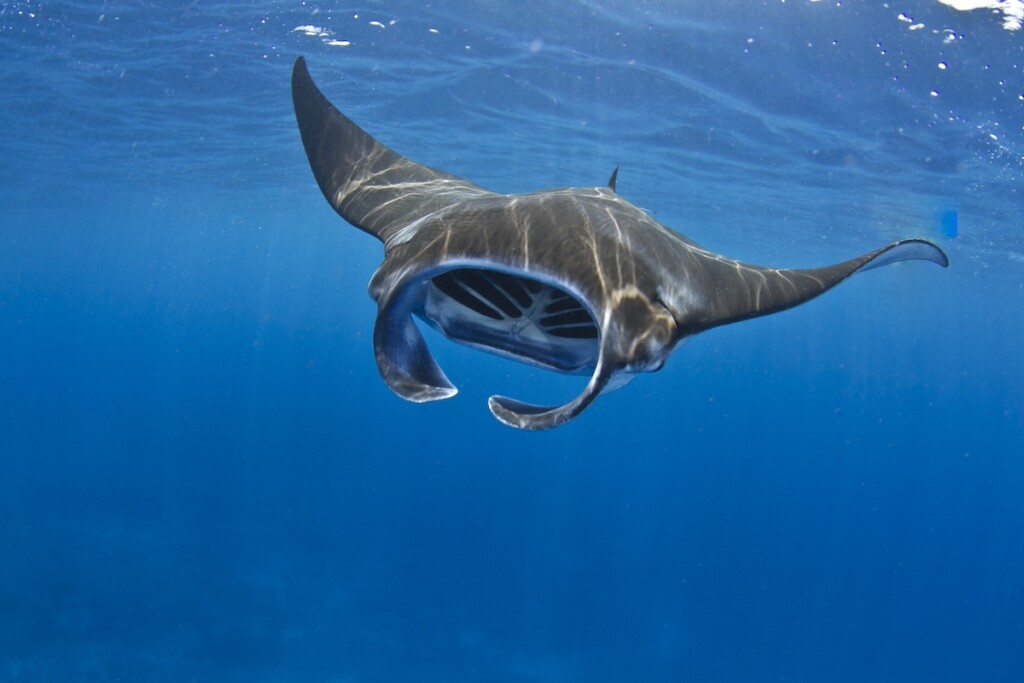
Photo: Getty Images/Todd Aki
Swimming with manta rays is an unforgettable adventure. These are some of the largest fish in the ocean, with wingspans that can exceed 20 feet. One of the best places to encounter these gentle giants is off the coast of Kona on Hawaiʻi Island, where nighttime manta ray dives and snorkel tours have become a world-famous activity.
Manta rays also hold cultural significance in Hawaiian culture and are mentioned in the Kumulipo, the sacred Hawaiian creation chant.
READ MORE: 10 Things You May Not Know About Manta Rays in Hawaiʻi
5. Manō – Sharks

Photo: Getty Images/RugliG
Sharks, or manō, are deeply revered in Hawaiian culture. They are not just apex predators; some are considered ʻaumākua, or ancestral guardians and family protectors. They also play an integral role in maintaining the health of marine ecosystems across the Islands.
6. Heʻe – Octopus
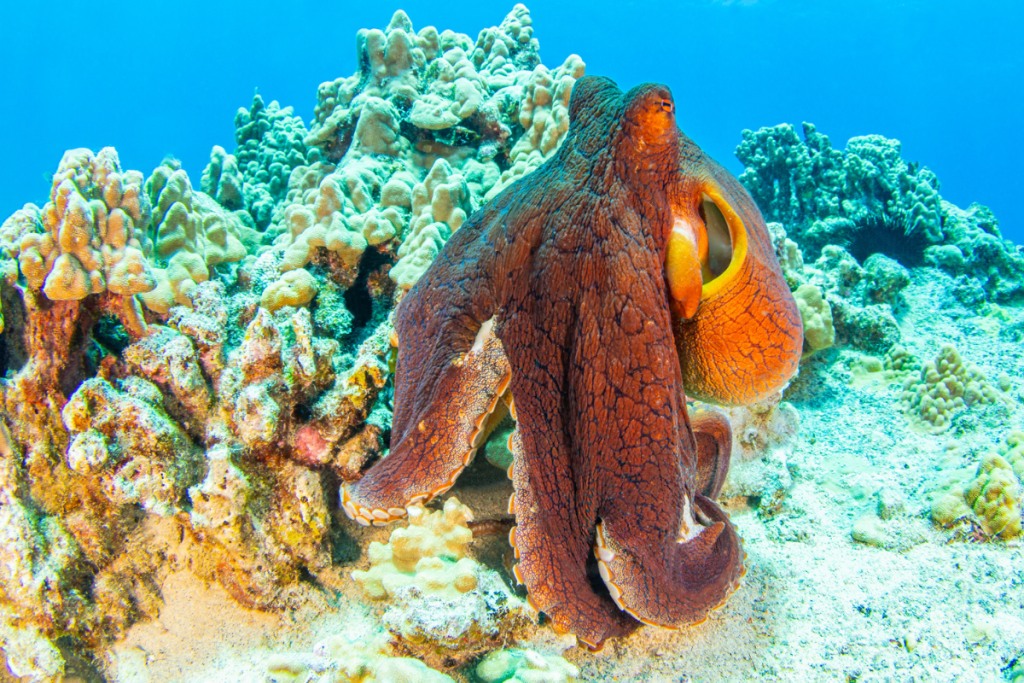
Photo: Getty Images/Douglas Klug
Heʻe is the word for octopus in ʻōlelo Hawaiʻi. These intelligent cephalopods are masters of camouflage and can change both color and texture to blend into their surroundings. More than 70 species of cephalopods have been recorded in the waters surrounding Hawaiʻi.ʻ
7. Naiʻa – Spinner Dolphins
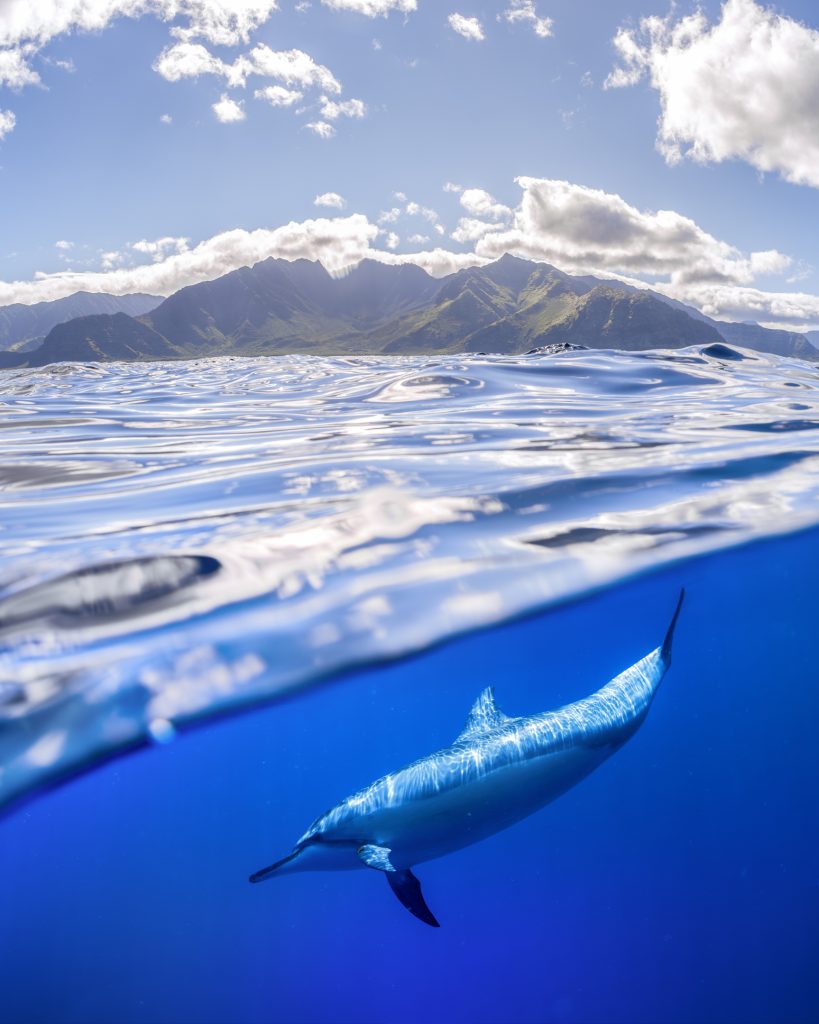
Photo: Getty Images/ RugliG
Pods of naiʻa, or spinner dolphins, are common throughout Hawaiʻi. These playful marine mammals can often be seen near Hulopoʻe Bay on Lānaʻi or at Waimea Bay on Oʻahu.
The animals are known for their acrobatic displays, leaping from the water and spinning multiple times in the air before reentering the ocean.