In my Oʻahu neighborhood, plumeria and pua kenikeni trees sit in yards of generous neighbors always willing to share their pua. Anytime I need to make lei, I ask a neighbor if I can pick a few dozen flowers.
From birthdays to graduations, giving lei is how we celebrate special occasions in Hawaiʻi.
Known for her vibrant, one-of-a-kind lei, Oʻahu-based lei lei maker Jill Harunaga says, “My loved ones, especially my keiki, inspired me to take up lei making again after we moved home from the mainland. I started making mini lei to celebrate their milestones with flowers from our yard.”
For many locals, it’s routine to make a lei or visit a lei stand in Chinatown to pick up gifts made from fresh flowers, such as pīkake, tuberosei or orchids. And for many others, including the shop owners, the art of lei making has been passed down for generations.
Meleana Estes says her late tūtū, Amelia Ana Kāʻopua Bailey, inspired her to make lei. “She was known for her lei poʻo and arms full of pua kenikeni she shared generously.” Estes recalls, “I came to know growing up that lei were an integral part of how my ʻohana shared our aloha, love and appreciation for someone, and how we marked events—big or small.” From Thanksgiving gatherings and family lunches to paddling regattas and welcoming someone from the airport, Estes says lei are always presented. “This is how we all continue to share our aloha and is what inspires me always.”
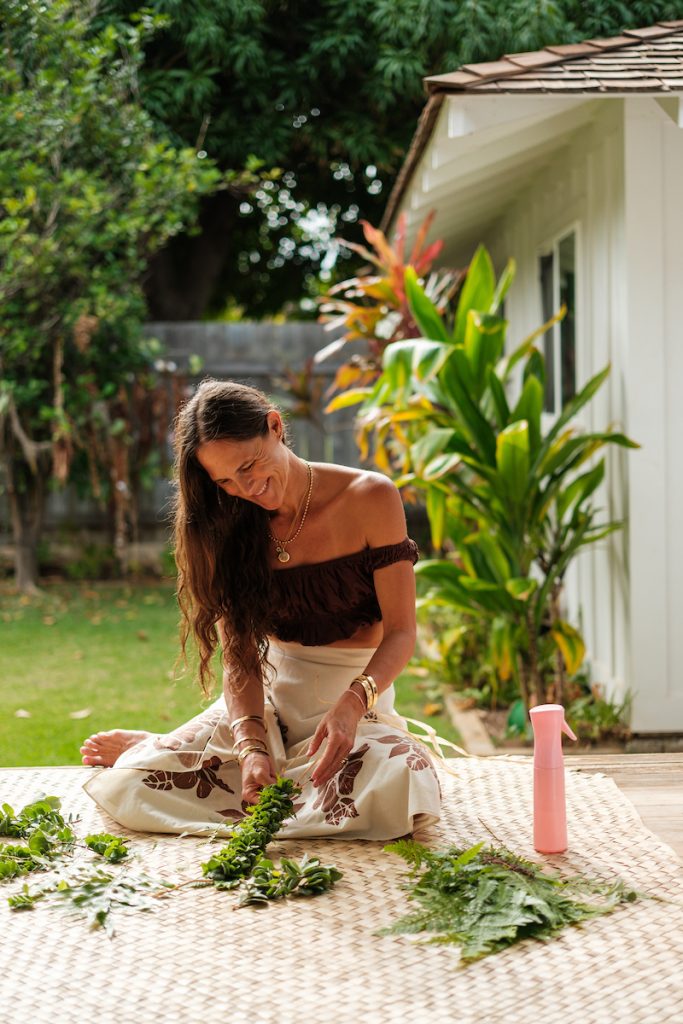
Photo: Aaron K. Yoshino
Estes paints a beautiful and heartwarming homage to Hawaiʻi’s lei community in her book, Lei Aloha: Celebrating the Vibrant Flowers and Lei of Hawaiʻi. The pages of the book are filled with personal stories from her childhood making lei with her tūtū, along with the history of lei in the Islands.
READ MORE: Q&A with Master Lei Maker Meleana Estes
Early Polynesian voyagers who settled in Hawaiʻi carried many traditions with them, including customs around lei. These early settlers constructed lei from flowers, leaves, shells, seeds, nuts and feathers. Lei were worn for adornment, but they were also used for ceremonies and to signify status.
With the advent of the steamship era in the mid-1800s, travel boomed in the Islands and lei vendors were soon lining the pier along Aloha Tower. It wasn’t long before the flower lei became an emblem of Hawaiʻi.
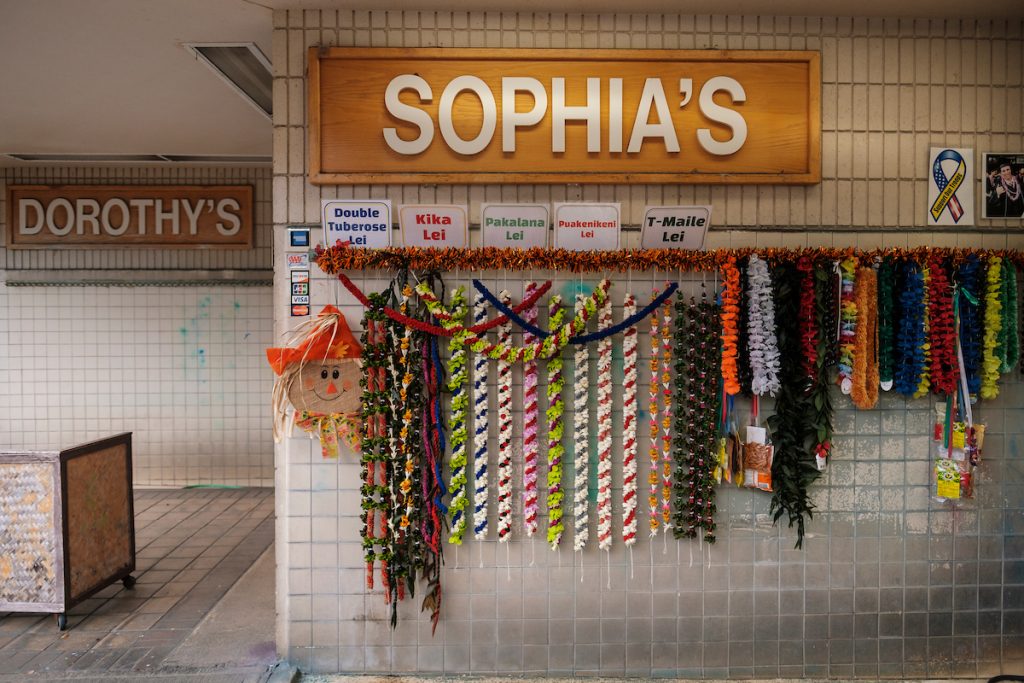
Photo: Aaron K. Yoshino
Since the 1940s, lei vendors have been setting up shop at the Honolulu airport. At businesses like Sophia’s, which has been passed down through three generations, it’s common to see residents picking up a lei or two—or as many as it takes—to welcome returning family and friends.
READ MORE: A Legacy in Lei Making with Stacy Farias
The simple act of making a lei ties us to Hawaiʻi’s rich heritage. It grounds us to the land and encourages its stewardship, and it brings us closer to the people we give them to. And they’re not simply handed to recipients—they’re placed over their shoulders, usually followed by a hug and a kiss on the cheek.
“Lei making brings together all things Hawaiʻi. It comes with kuleana to the land, the water and the elements around us, as well as to the art of traditional Hawaiian lei making,” says Britney Alejo-Fishell, founder of Haku Maui.
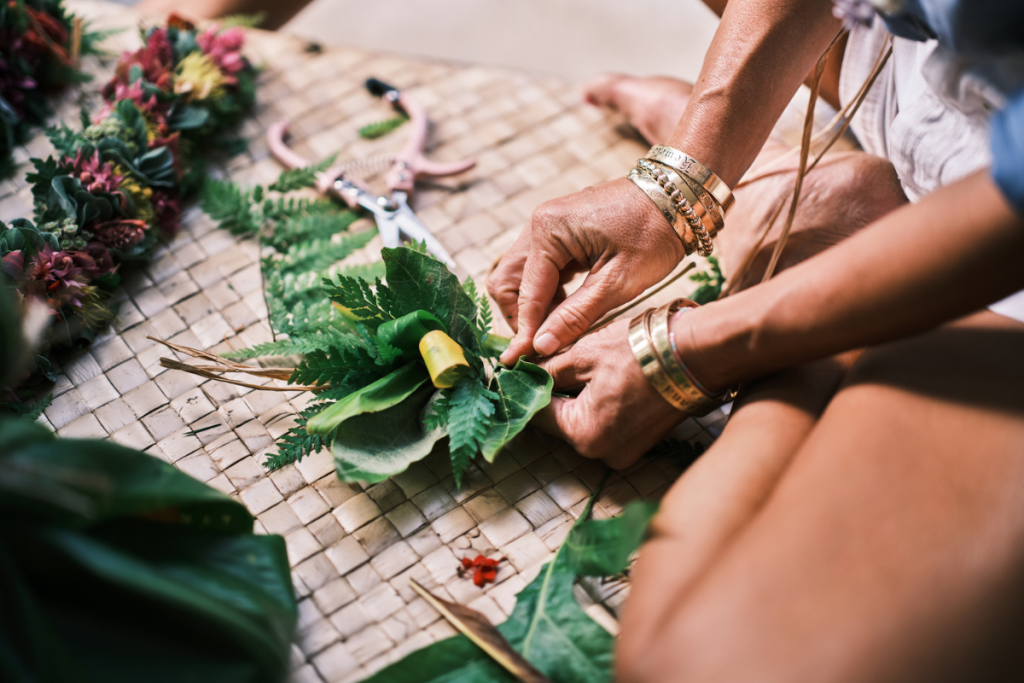
For many, lei making is a ritual. Care and consideration go into every step, from sourcing materials to setting an intention while creating a gift to sharing the finished piece.
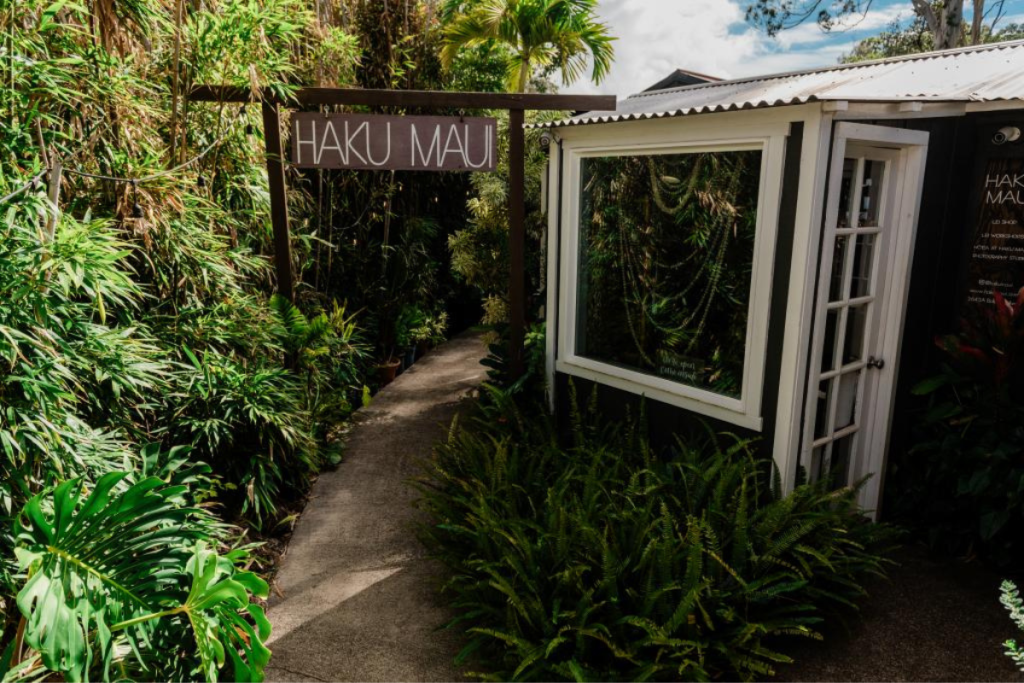
Photo: Hawaiʻi Tourism Authority (HTA)/John Hook
During her lei-making workshops at her boutique in Makawao, Alejo-Fishell says she wants each guest “to feel a genuine connection to place, to the ʻāina, and to the stories held within each flower and leaf. Lei making isn’t just about creating something beautiful; it’s about slowing down, being present, and honoring the process with care and intention.”
Alejo-Fishell was inspired to make lei by her grandmother, Mary Ann Jane Kanohekahiwahiwaokalani Soares. She says her grandmother had the most beautiful blooms in her yard. The flowers Alejo-Fishell says, “were sewn into lei or placed in little recycled glass bottles throughout the house. It was truly her way of showing love.”
The tradition of making lei is “ancestral knowledge passed down from generation to generation,” explains Alejo-Fishell. “This knowledge is inherited, not owned, reminding us that we are part of a lineage rather than separate from it. This is our connection to piko and to place, where lei becomes more than adornment; it becomes identity, memory, and belonging.”
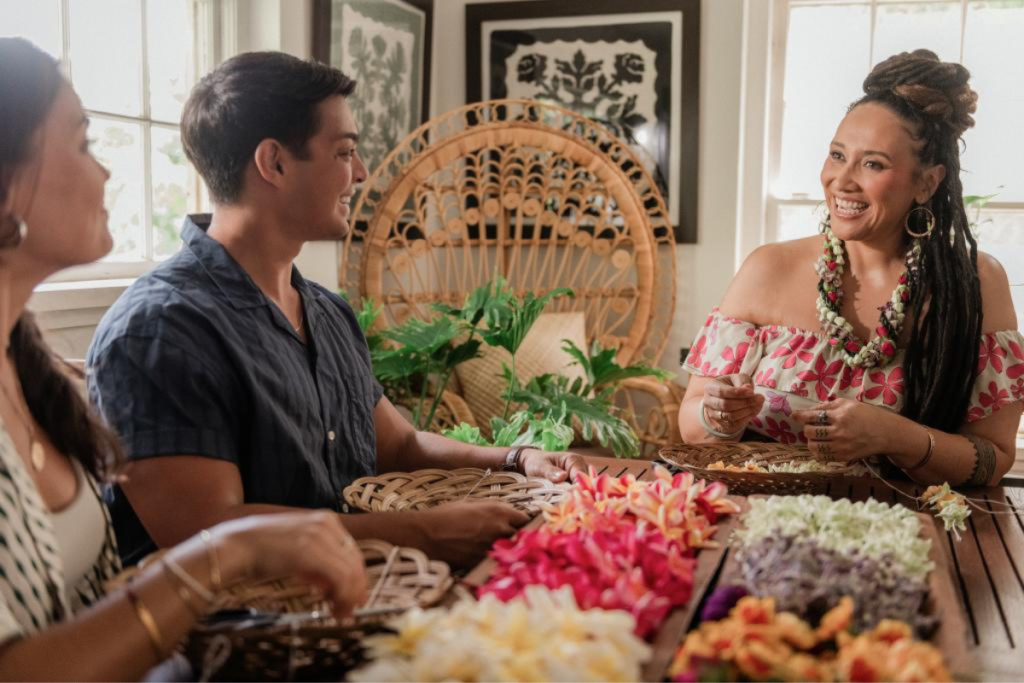
Photo: Hawaiʻi Tourism Authority (HTA) / John Hook
That’s why Alejo-Fishell believes it’s important to use locally grown flowers and foliage in lei. “It keeps the practice rooted, tying the lei not only to the maker but also to the ʻāina and the community. It strengthens our connection to both kamaʻāina and malihini alike, reflecting the great care and respect we put into sharing through lei.”
I remember being in either first or second grade, and our class weaved lei for Mother’s Day with yarn—which my mom still has. As I got older, I learned to twist tī leaves gathered from backyards into lei and to create lei kui, or lei strung together materials using a needle.
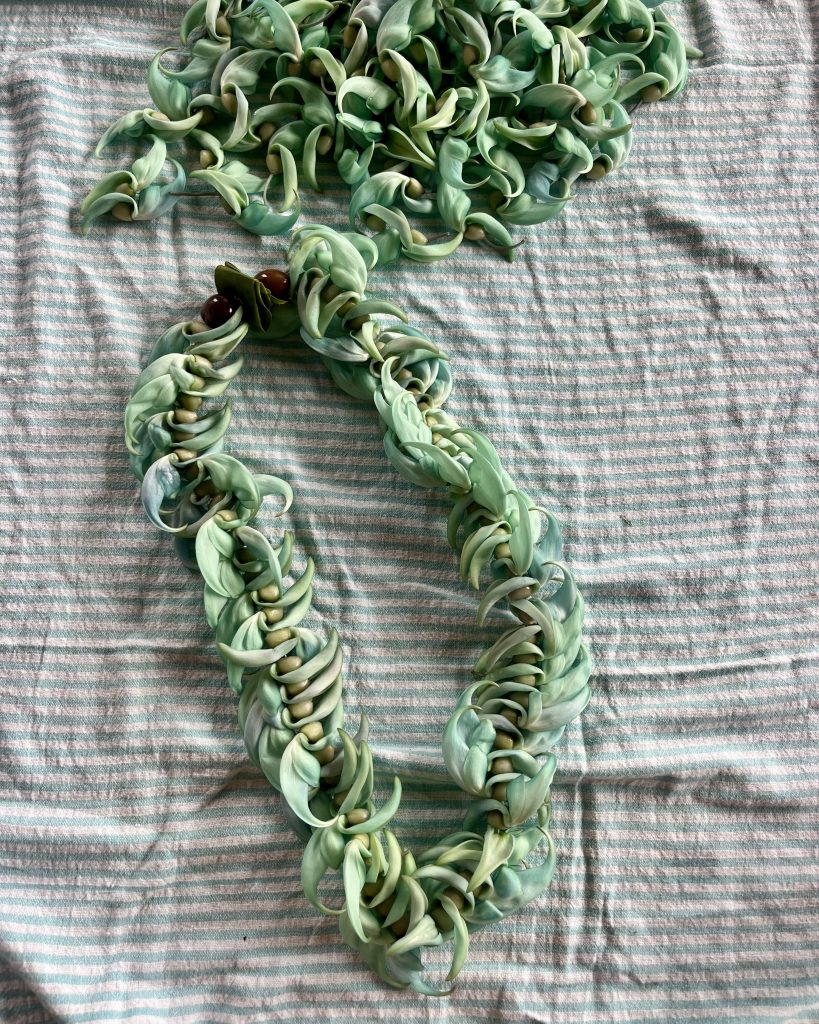
Photo: Grace Maeda
A few months ago, I strung together claw-shaped flowers from a jade vine to make a vibrant emerald lei kui for a friend, and just a few weeks ago, I strung together fragrant pua kenikeni. While all my friends greatly appreciate the lei I make them, I deeply cherish the process of sourcing the flowers and putting intention into each lei I string.
“Lei making means connection to me. It means connection to my ʻohana, connection to this special practice, connection to the person you think of while making lei, connection to place where you gather, connection to the beauty of being born and raised in Hawaiʻi,” Estes says.
Harunaga adds, “I hope that people feel loved when they receive a lei that I’ve made.”
Grace Maeda is the editor of HAWAIʻI Magazine.