Across Hawai‘i, silver and gold bangles adorn the wrists of sisters, mothers, aunties and tūtū.
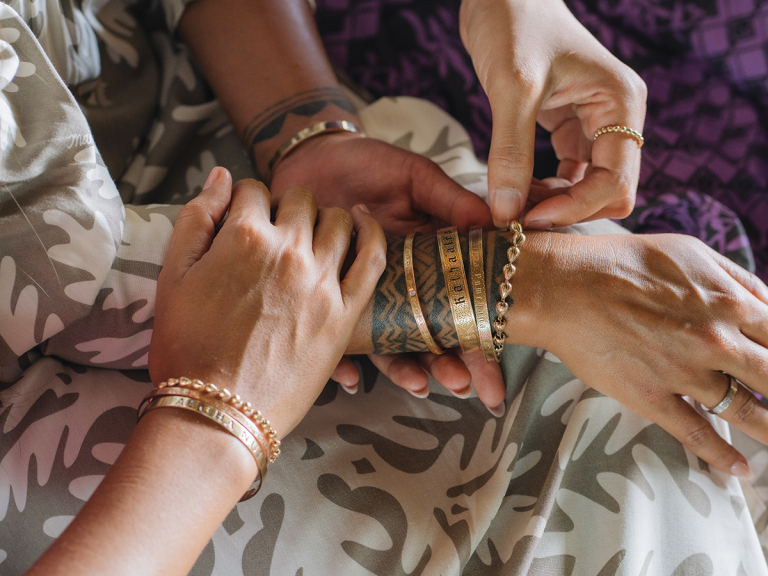
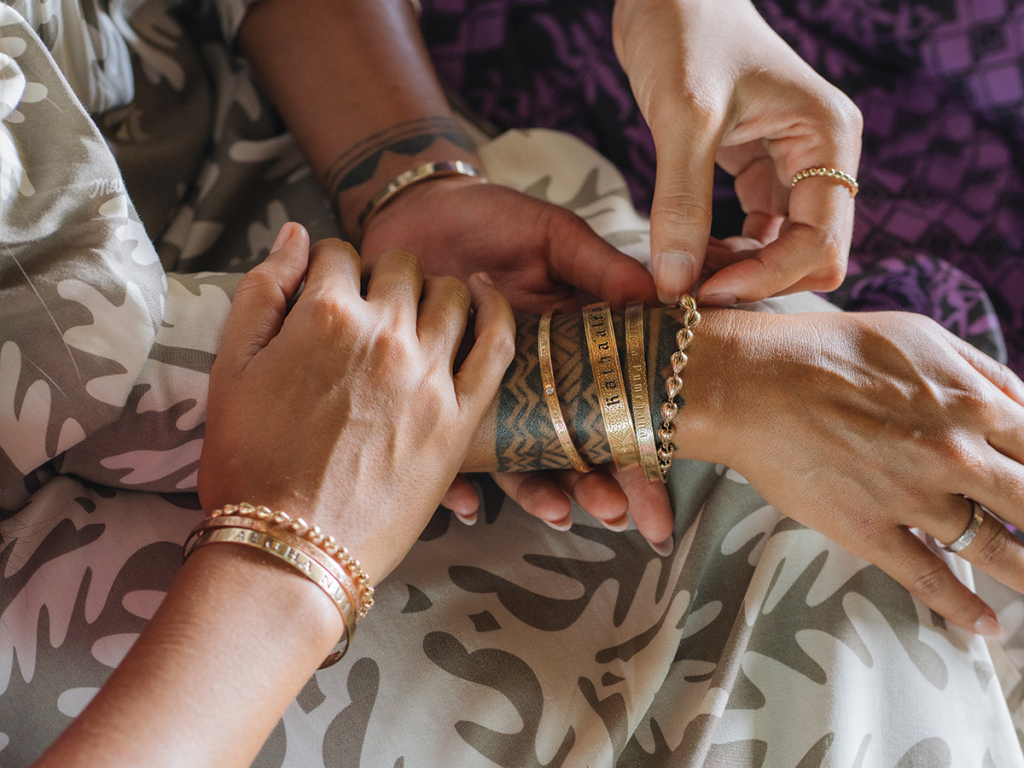
With names or initials engraved in an Old English-style font, Hawaiian heirloom jewelry isn’t just an accessory, it’s part of the Islands’ history and often represents family lineage and major milestones.
“Like making lei and sharing lei, it’s in our DNA in Hawai‘i,” says Meleana Estes, co-founder of HIE Hawai‘i.
“It’s just something that’s part of us.”
The tradition is believed to have started with young Lydia Kamaka‘eha Paki, who would later become Queen Lili‘uokalani, the last reigning monarch of the Hawaiian Kingdom. In an engagement portrait from 1862, Lili‘uokalani can be seen wearing what is believed to be the first bracelet in this style. The solid-gold bangle is engraved with Hoomanao Mau, or “to remember always.” The bracelet was handcrafted by Honolulu jeweler Christian Eckart and emulated English Victorian designs popular at the time.
READ MORE: A Brief History of Hawaiian Heirloom Jewelry
Estes recalls growing up with her close friend, Noël Shaw. The two were accustomed to seeing the matriarchs in their families with stacks of gold bangles around their arms. Major milestones were often marked with a new bracelet, and treasured pieces were passed down through generations.
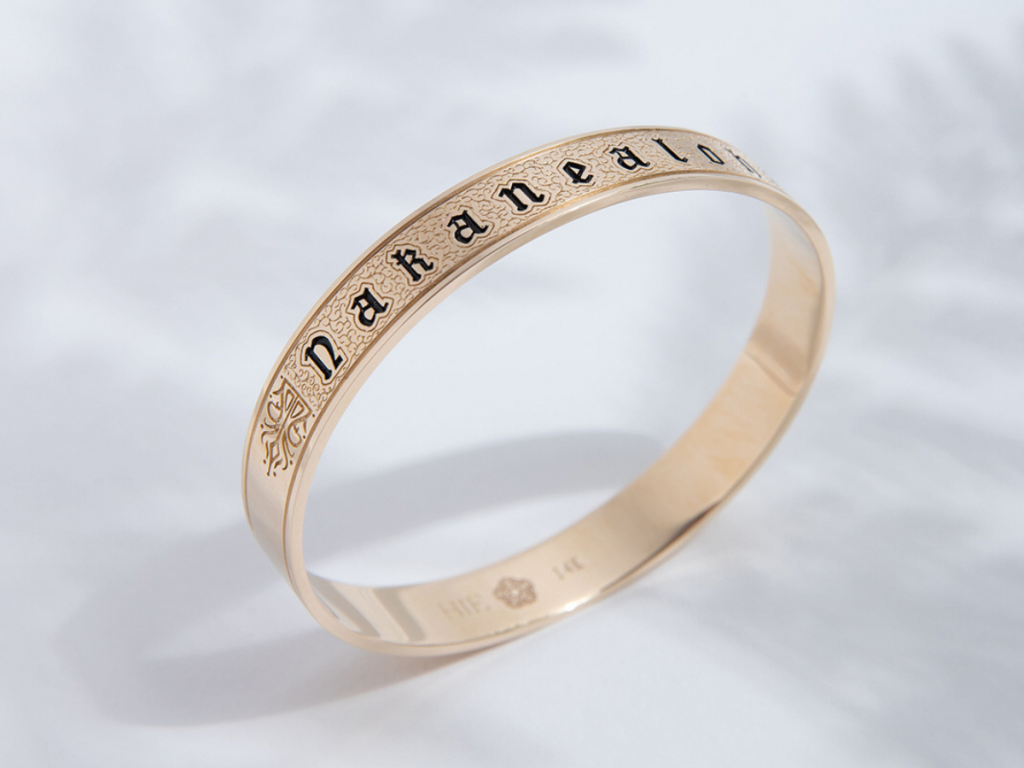
Photo: Courtesy of HIE Hawai‘i/Jenn Ellenburg/Doug Fbalter
But when Estes and Shaw wanted new bracelets in the older styles they remembered seeing their tūtū and mothers wear, they couldn’t quite find what they were looking for.
“There was a wanting for new bracelets to look like the older versions, like our tūtūs,’” Estes recalls.
The two friends founded HIE Hawai‘i in 2023, creating solid-gold bracelets inspired by the simpler, traditional styles they grew up with. The pieces are designed to be worn every day, layered with existing jewelry and, eventually, passed down to future generations.
Part of what differentiates Hawaiian heirloom jewelry from fine jewelry, says Estes, are the engravings, whether names, places or sentiments. She says her team always encourages customers to include the date to mark the moment in time.
For Estes, these pieces are more than just jewelry. They carry the memories, stories and experiences of the women who wore them before—and she hopes that this energy is carried on in each bracelet and felt with every generation.
“There’s a certain steadfast, unique strength of women in Hawai‘i,” Estes says. Mana wāhine will be surfing in the ocean one moment, making lei, hosting family. Estes points out during all of these activities the jewelry is never taken off.
“There’s an inner strength—maybe it’s coming from an Island nation—all that goes into these bracelets that get passed on.”
This story was originally published in our 2026 FALL/WINTER issue, which you can buy here. Better yet, subscribe and get HAWAIʻI Magazine delivered to right to your mailbox.
Grace Maeda is the editor of HAWAIʻI Magazine.