
My dad knew trade winds and Kona winds by the direction the smoke was blowing from the sugarcane mill.
But to me, the continuous gray clouds blowing from the smokestacks of the Pu‘unēnē Mill had nothing to do with wind and weather. They were just part of Maui’s natural landscape. And it never crossed my mind that the smoke would someday cease.
As 2016 came to an end, so did the sugar era on Maui and across Hawai‘i. After 115 years in operation, Hawaiian Commercial & Sugar Co. closed its Pu‘unēnē factory, the last operating mill in the Islands. In 2018 its parent company, Alexander & Baldwin, sold 41,000 acres of former sugarcane fields to Mahi Pono, a farming company.
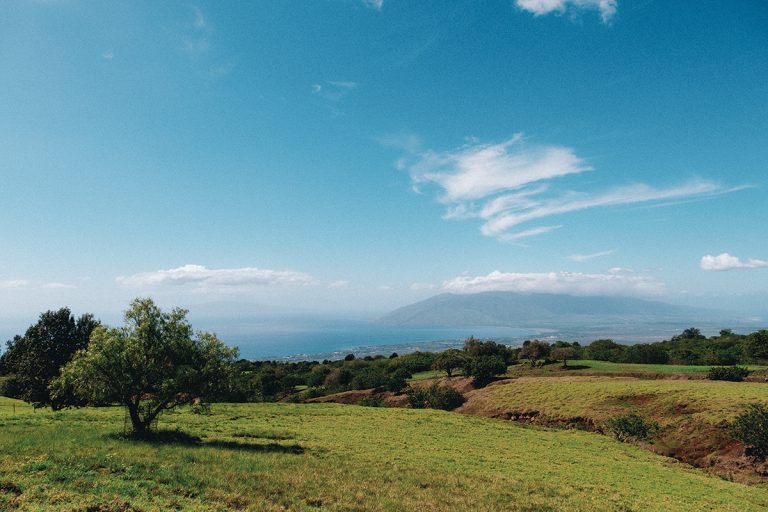
When I was a kid sitting in the backseat of my parents’ car as we drove along Haleakalā Highway, I’d look out and see an ocean of green sugarcane. Today, it looks different, replaced by groves of citrus and coffee and other crops.
And the island’s West Side is dramatically different too. Lahaina was forever altered by the 2023 wildfires, and its healing continues.
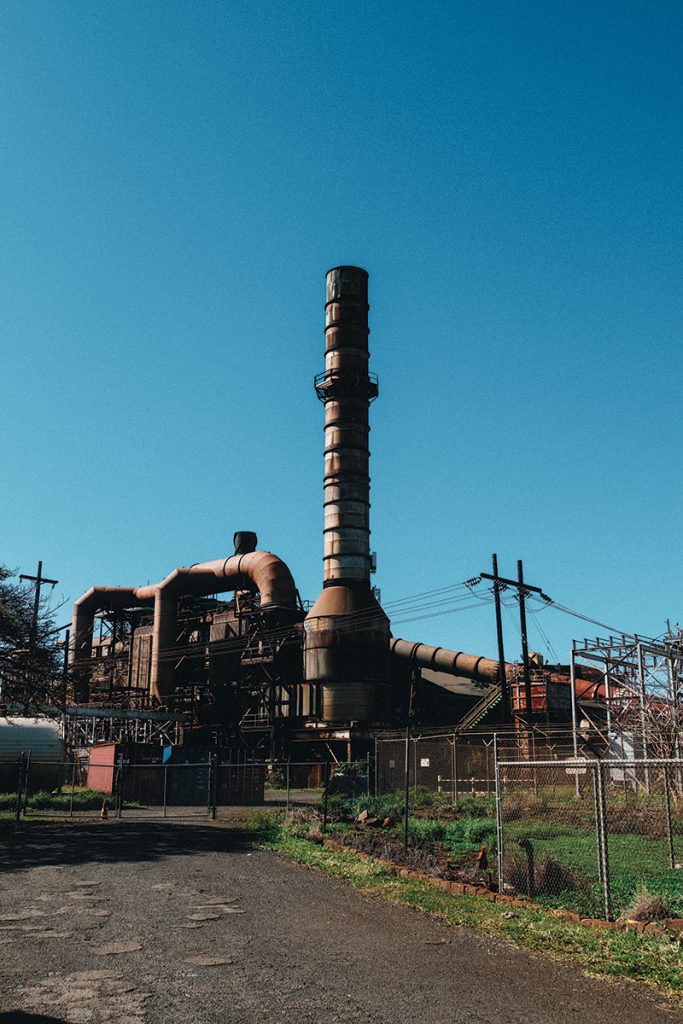
Photo: Aaron K. Yoshino
In 2024, O‘ahu construction company Nan Inc. bought the historic Pu‘unēnē Mill and 300 adjacent acres. Although plans for the site haven’t been announced, Nan Inc. says the mill will undergo significant changes. In an interview with Hawai‘i Business Magazine, Nan Inc. VP Wyeth Matsubara said, “We’re going to probably have to do some substantial demolition of at least the interior machinery that was done for all the production.”
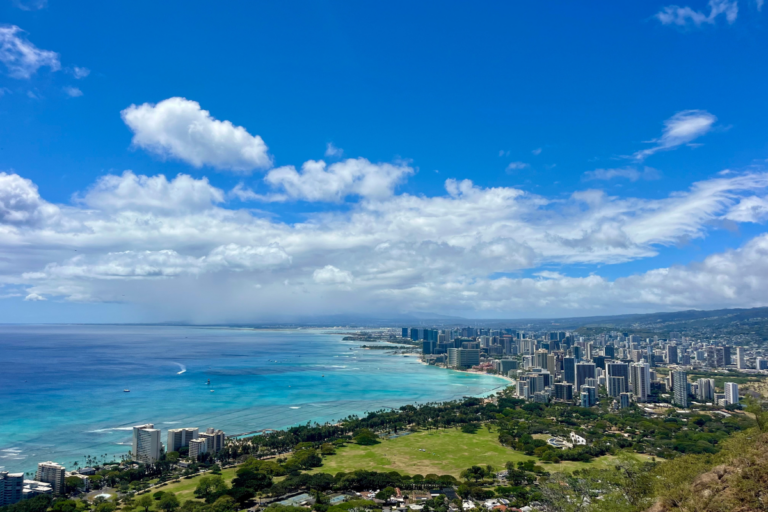
Like many people, I’ve watched my home change. I come from a generation that grew up with Costco and Walmart right down the road. I’ve witnessed new buildings rising, altering the island’s topography. I still remember the excitement when Target first opened in Kahului.
While the changes are clear, I find solace in the unfaltering constants.
From the sun peeking above Haleakalā every morning to the stream flowing through ‘Īao, there’s stability amid all the change. I’m at ease knowing that Haleakalā is sheltering me in the east and Mauna Kahālāwai in the west, and that all around are close-knit communities.
I hold on tight to memories of growing up on Maui. I’d wake up to Pukalani’s cool air, I’d play in streams trickling through my friends’ backyards in Ha‘ikū and I’d watch the sun sink below the Pacific from Mākena. Growing up on Maui was special.
But home can also be complicated, full of heartbreaks and devastating losses. At times, the island forced me to grow up, challenging me and exposing me to difficulties never reflected in postcards of the Islands.
But when I’ve really needed it, Maui has brought me comfort.
It’s nearly impossible to capture everything that makes this island extraordinary. So, I asked a few community members what Maui means to them.
President of the Maui Native Hawaiian Chamber of Commerce, Kainoa Horcajo, says, “Maui didn’t just shape me. It raised me. The land disciplined me. The community corrected me. Its history humbles me.” He adds: “To say my entire being, physically, mentally, spiritually, has been shaped by this place would still be understating it. I feel inseparable from Maui, and Maui inseparable from me. I owe my life to this place, its people, its history, and its future in ways that are difficult to put into words.”
Megan Nakashima, president of Pukalani Superette, offers something simpler but equally profound: “Isn’t Maui everything to us?”
On my brief jaunts home, moments flow together and often feel serendipitous. Delays result in pleasant, unplanned encounters. Detours become destinations. Time feels slower.
On a clear morning, as I leave the Kahului Airport and look east toward Haleakalā and west to Mauna Kahalawai, I’m enveloped by sweet and familiar air. And I reflect on the feelings that Maui stirs in me.
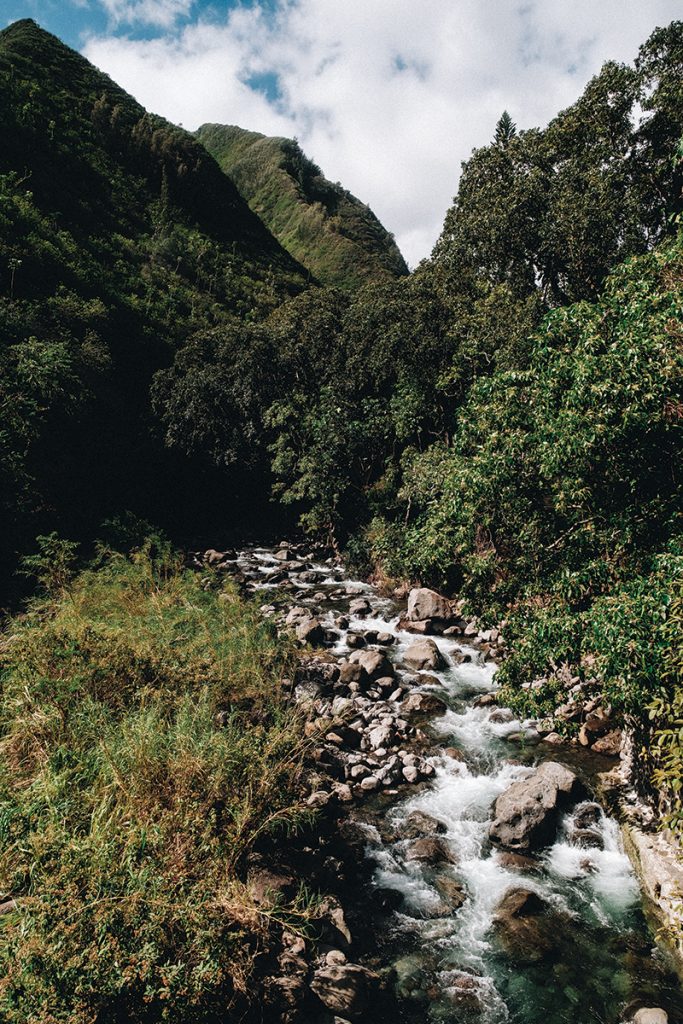
Photo: Aaron K. Yoshino
At ‘Īao Valley, I feel grounded as pristine water flows past ancient rocks, smoothing and eroding them.
Framed by the lush steep mountains and 2,250-foot Kūkaemoku, the valley was a sacred site believed to be a burial ground for ali‘i long before Western contact.
It’s also here in 1790 that one of the most brutal battles in Hawaiian history took place. Kamehameha the Great and his forces fought Maui’s warriors led by Kalanikūpule. The river at ‘Īao ran with blood during the Battle of Kepaniwai, which means “dammed stream” for the bodies of dead warriors that blocked the river’s flow.
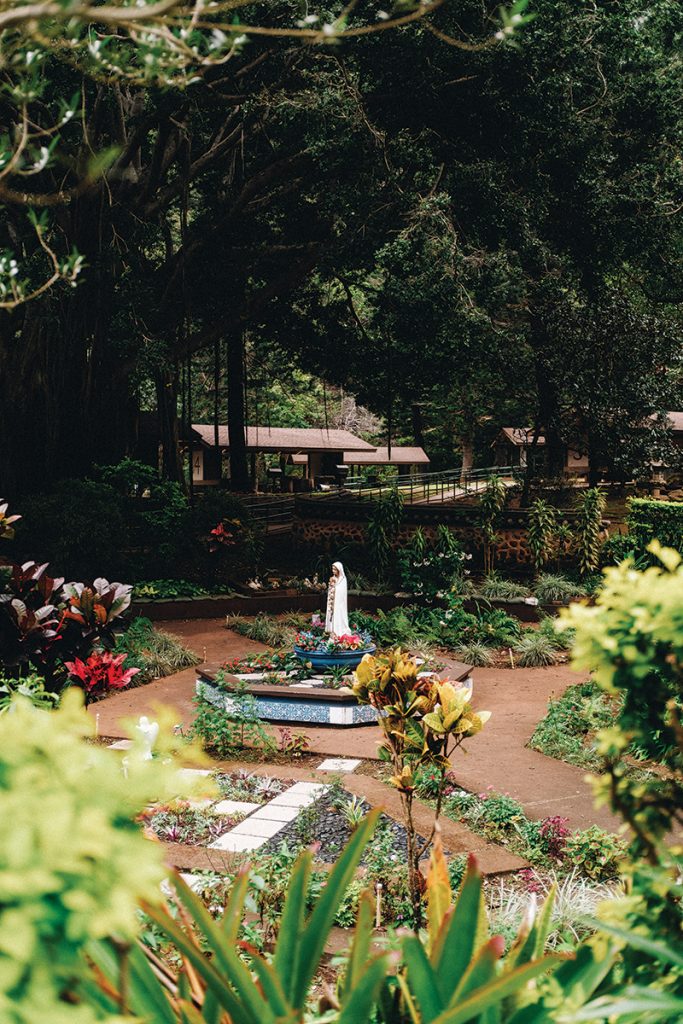
Photo: Aaron K. Yoshino
Today ‘Īao Valley is a peaceful pocket that deserves reverence and inspires introspection.
At the base of the valley, Kepaniwai Heritage Gardens is filled with structures, including an early-Hawaiian hale, a Portuguese-style villa and a Chinese pagoda. The gardens are a beautiful tribute to the waves of immigrants who worked tirelessly to plant roots and grow lives here.
Making my way to one of the island’s many beaches, I find a seat under the pavilions at Ho‘okipa Beach Park to watch surfers ride the waves.
Today people from around the world continue to come to Maui’s shores, for many reasons. Ho‘okipa lures surfers, especially during the winter months. As for me, I look forward to summer days when the conditions are flat and I can swim out with ease.
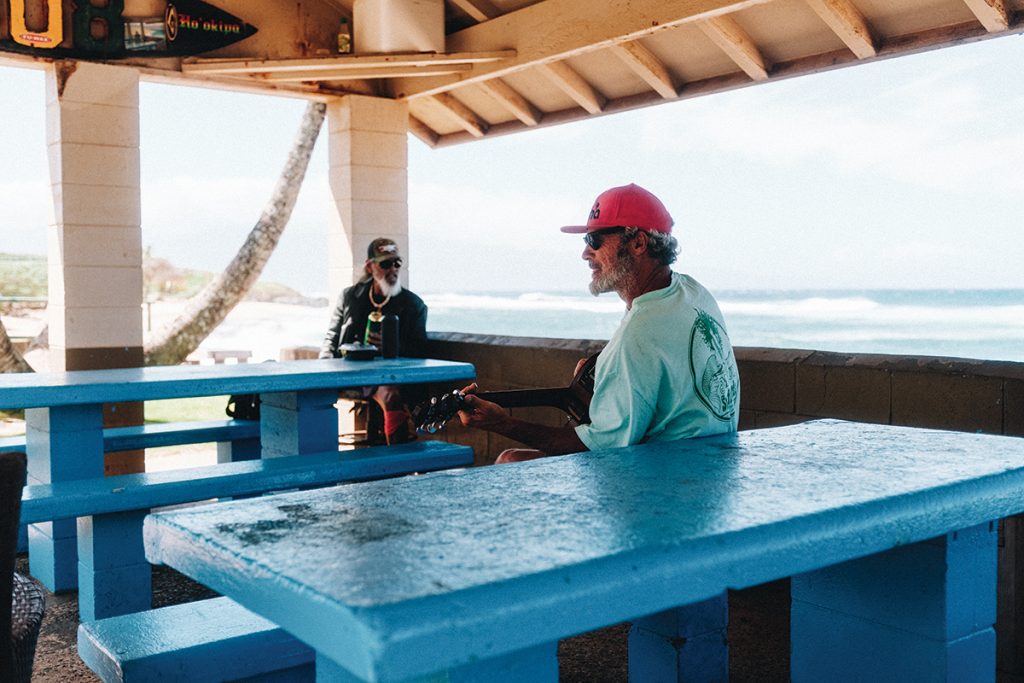
Photo: Aaron K. Yoshino
Just sitting on this bench, watching and listening, I feel a kinetic energy as surfers paddle out and uncles talk story while strumming guitars and ‘ukulele.
Driving Upcountry, I feel a sense of serenity. I’m immediately at peace in the place where I grew up, and I’m relieved that not too much has changed. I’m greeted with the familiar crisp air that I find myself missing more and more.
Passing Rice Memorial Park, kids use scraps of cardboard boxes to slide down the steep hills, something I did with my siblings years ago. Not far from the park, I pass Kula Country Farms. The fourth-generation business welcomes families to pluck strawberries in the spring and pick pumpkins from the patch in the fall.
Venturing farther up the slopes of Haleakalā toward Kēōkea, green pastures stretch for miles. Strolling down a quiet street, I take in breathtaking views of the Valley Isle and neighboring islands of Kaho‘olawe and Lāna‘i.
Near the intersection of Old Haleakalā Highway and Makawao Avenue, where the towns of Pukalani, Kula and Makawao all meet, stands a bright green building. Stepping into Pukalani Superette, I feel the community’s spirit.
Generations grew up shopping here, and I still stop by, even if it’s just to pick up li hing candy. The family-run business is approaching a century of service and has been a cornerstone of the Upcountry community since the 1950s.
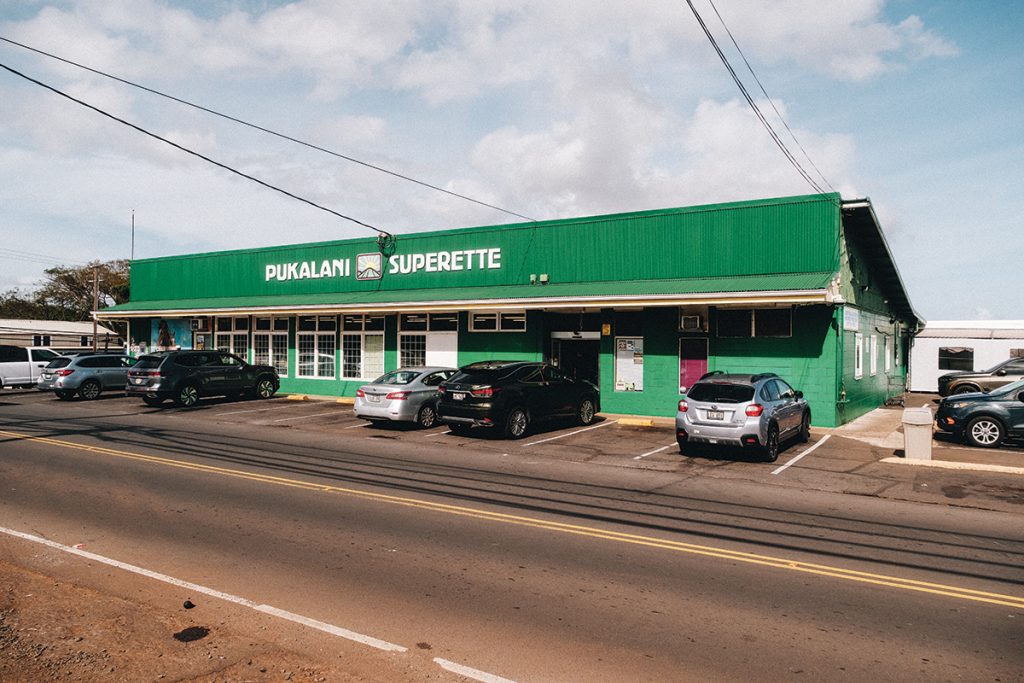
Photo: Aaron K. Yoshino
“As we quickly approach our 100th year in business, we’re spending a lot of time reflecting on how we got here, who we’ve had the pleasure of meeting and the challenges we’ve had to overcome,” says Nakashima. “It boils down to this: Maui means everything to us, and we wouldn’t trade being on our little corner of Pukalani for all the gold in the world.”
No place is fully constant—and Maui is no different. Storefronts change, people move away, new faces arrive, disasters strike. But the mountains, the streams and the tight-knit neighborhoods remain. And so does the spirit of the island.
This story was originally published in our SPRING/SUMMER 2026 issue, which you can buy here. Better yet, subscribe and get HAWAIʻI Magazine delivered right to your mailbox.
Grace Maeda is the editor of HAWAIʻI Magazine.