
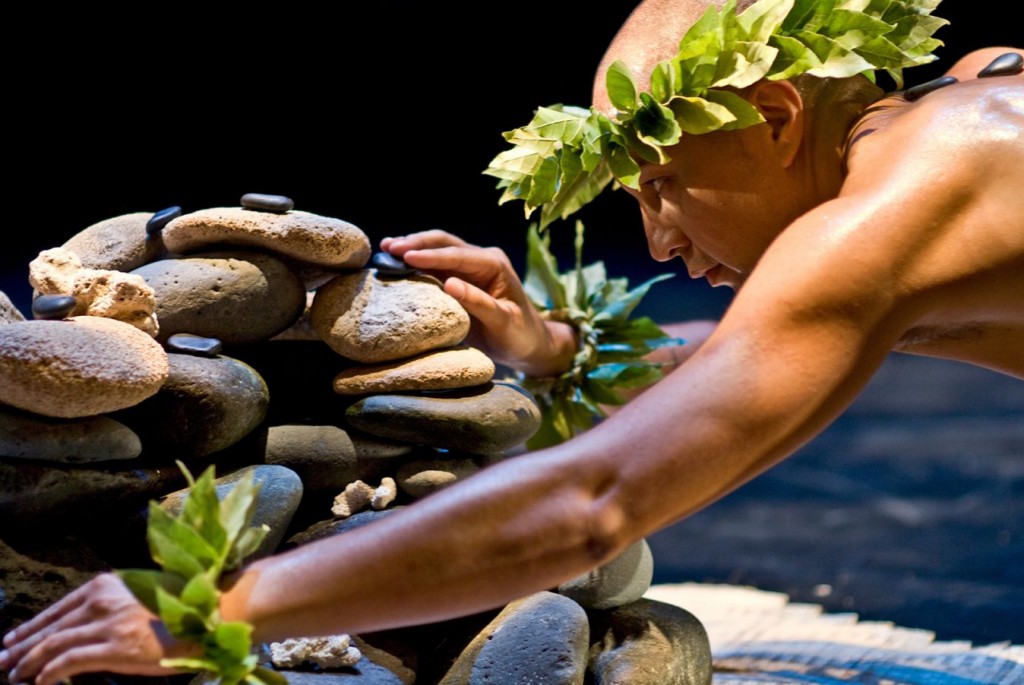
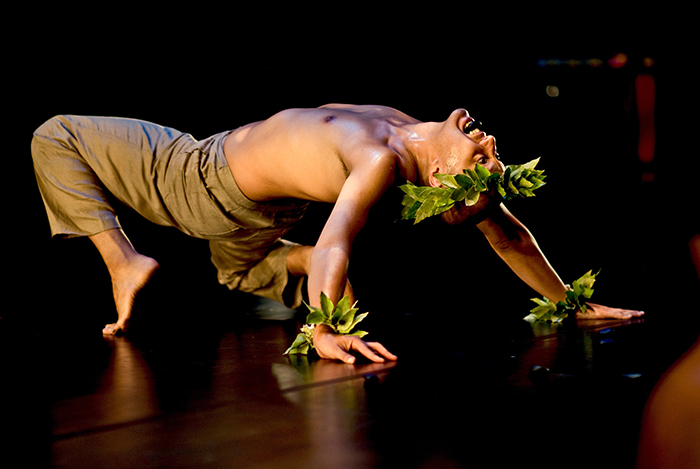
Dancer and choreographer, Christopher Morgan, is touring the Islands with his dance theater piece, “Pohaku,” which pairs hula kahiko (traditional hula) and modern dance styles together. It’s a solo dance performance, but he shares the stage with his kumu hula (hula teacher) Elsie Kaleihulukea Ryder of Halau Hula o Kukunaokala and electric cellist Wytold, who have also created a unique musical score of classical music with Hawaiian chanting and percussion. The blending of Hawaiian hula with Western styles of dance isn’t a common occurence, but it represents the internal conflict that Morgan feels as a mixed race person who was born in California to parents who were born and raised in Hawaii.
What is the story of “Pohaku”?
I always felt this interesting pull back to Hawaii, going back to the Islands to visit grandparents, aunties and uncles and sort of feeling like that was our main cultural identity growing up. So then, as I found Western dance forms and that became my life’s work; I became curious about connecting them. I remember being a kid and wondering why on earth would my parents want to leave this paradise and move to the continent. That just seemed so strange. But then as I grew older and I looked at what was happening in the 1950s—early 1950 when they left—and then tracing that back to the overthrow of the kingdom, that became the foundation of this story—how the political ramifications of colonization and the overthrow precipitated an outward migration, including my parents, and so that left this dispersal of the people. And I’m part of that. So it’s about that tension, sort of looking at those personal stories and then the larger story.
How did the idea first come about to create “Pohaku”?
I was living in New York City at the time, and at a part of my career where I was starting to dance less and make dances a bit more. And I started noticing these trends in what I was making that felt like, in one way or another, they were connected to hula. I wanted to learn more about that, because when I was a little kid I was so young when I was dancing hula, so I never had a good intellectual grasp of it. It was a lot of mimicry you know, like, my sisters would show me a step and then I would do the step and I didn’t understand necessarily how or why or where it came from. So I wanted to get deeper into that and I had a conversation with my mom, about 12 years ago, and she said, you should study with your cousin John. His work is connected to Molokai and that’s where my grandmother lived, so that felt very kind of pono, right, an an honest way to go about that. So I reached out to my cousin John and we started these conversations. I was awarded a grant from a foundation to take the summer off and just go study with him. And we found out about that award letter two weeks before he passed away in 2006.
I waited awhile and it took about three years for us to reorganize, and then I ended up going and studying with some of his haumana (students) who were continuing his work and running the halau (school). And from there, I left with this feeling of a responsibility, or kuleana, somehow, because I had an opportunity to share a bit about the Hawaiian story that maybe my modern dance audiences really didn’t know anything about.