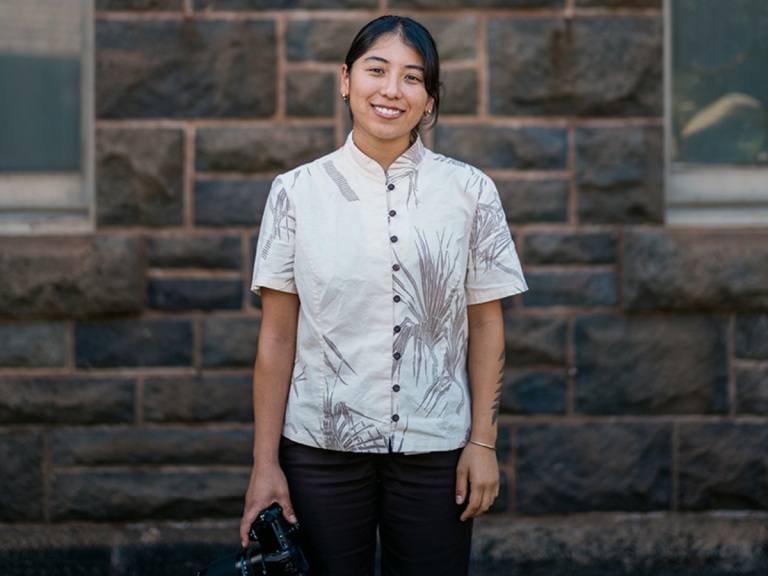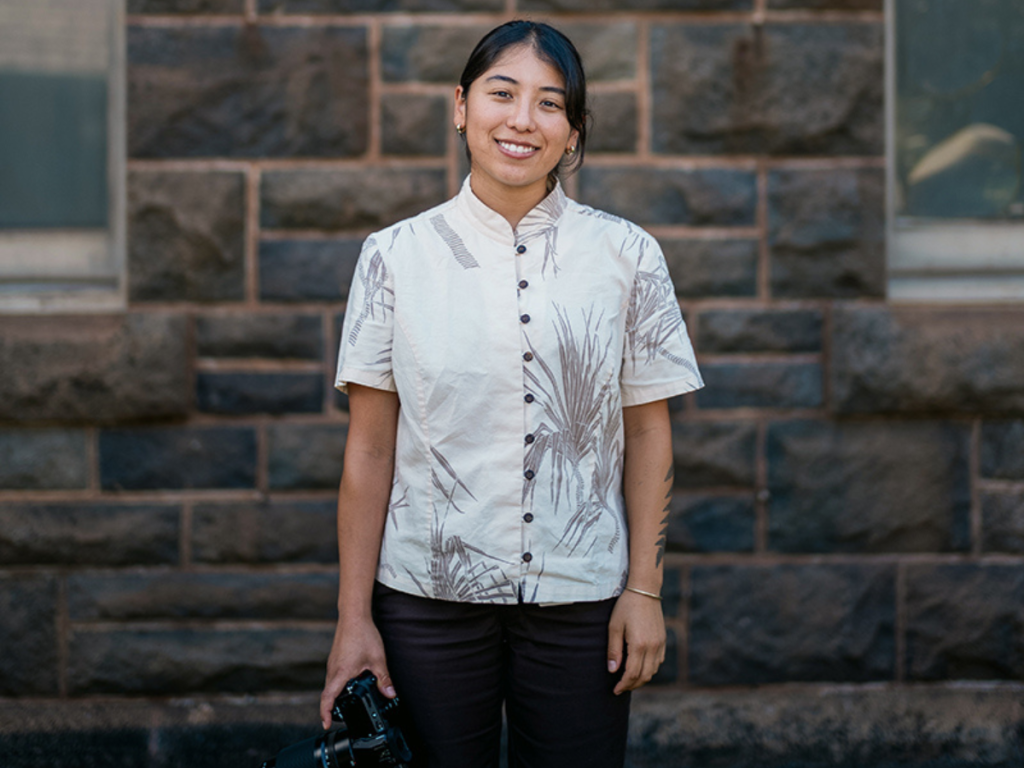
Noel Kenny moves across Bishop Museum’s campus unnoticed, pull cart in tow. Armed with camera gear, tethering cords and portable backdrops, her stroll signals the start of another day documenting the museum’s vast collections and preserving Hawai‘i’s history for future generations.
Kenny’s passion for photography began during her freshman year at the University of San Francisco, where she studied advertising and design. After graduation, she worked in advertising in San Francisco, honing her skills in visual storytelling and content creation, and when homesickness hit, she returned to the Islands in 2021.
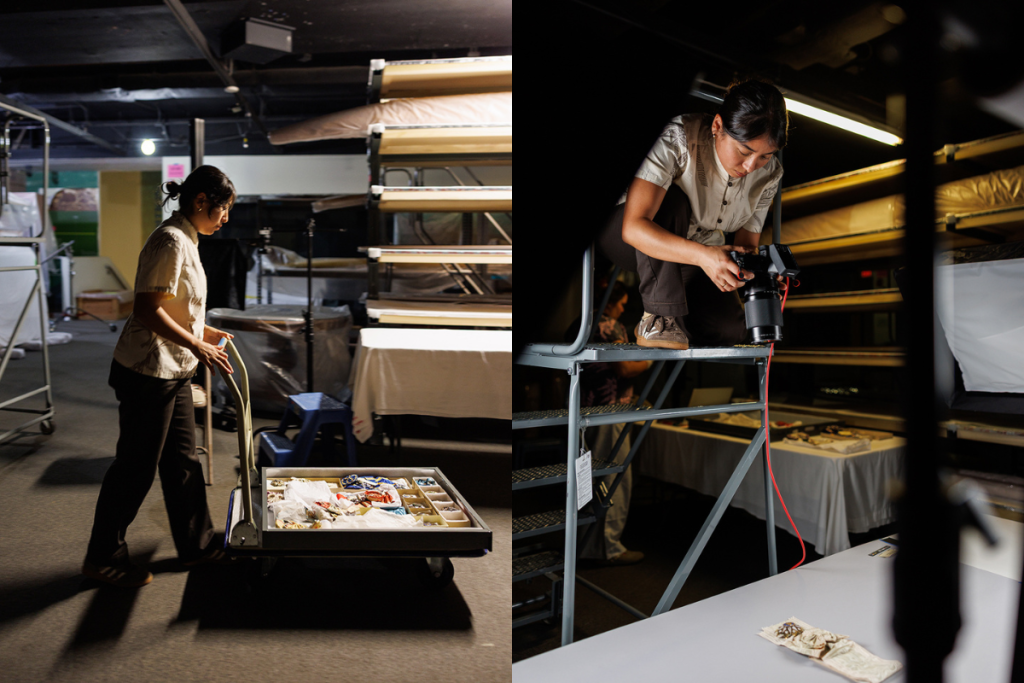
Photo: Aaron K. Yoshino
Today, as collections photographer and asset manager at Bishop Museum, Kenny is helping to digitize the museum’s collections, making them accessible to audiences around the world. Combining technical precision with an artistic eye, she creates authentic, unedited images of specimens and cultural artifacts that serve as both archival documentation and community resources.
At least two days each week, Kenny moves between collection spaces at Bishop Museum, working with departments to photograph and digitize varied collections—from archival images from the 1800s to 20-foot-long canoes. Because of the variety of subjects, creativity is key and it’s up to her to find new ways to photograph each object. She also builds pop-up studios in collection spaces, sometimes even in hallways.
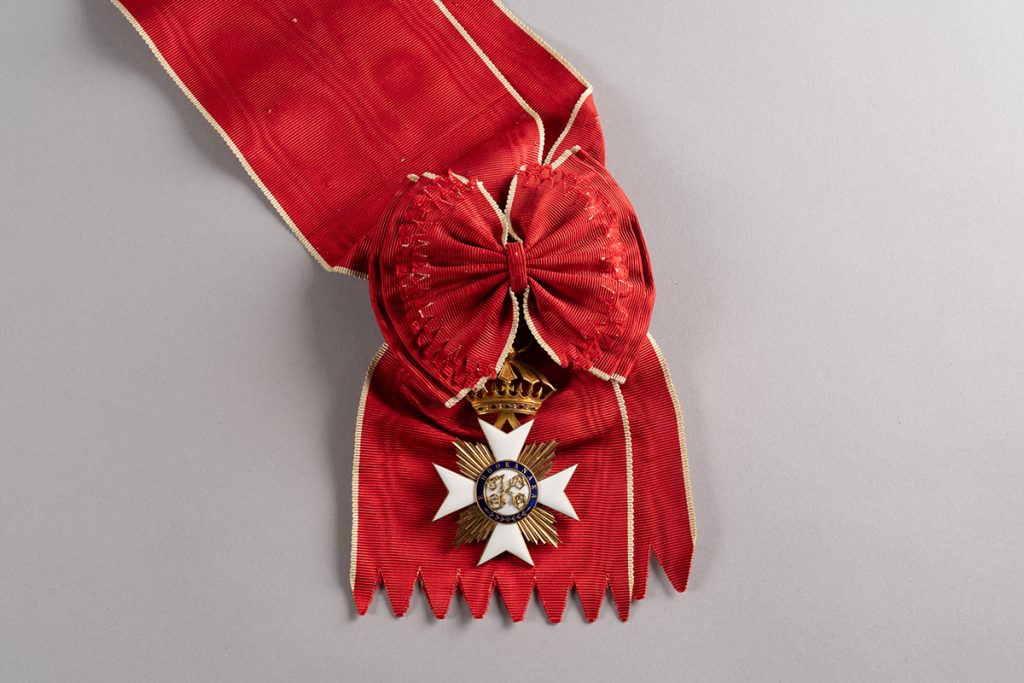
Photo: Courtesy of Bishop Museum Archives/Noel Kenny
Though the click of a camera takes almost no time at all, the preparation behind each image fills her days. “Before I take the first photo, I spend time talking to the lead in the department to learn more about the project they are working on and the future use of the photos I am taking,” she explains. “Then, we can highlight specific parts of the specimen, changing the workflow for how I set up equipment or lighting.”
Each photograph is approached with a nod toward accuracy and respect. “There is a nuance based on material. Lighting is important for bringing out texture or fine details,” she says, adding that a lot of thought goes into “ensuring we represent the artifact respectfully.” For example, she says, “We want objects to stand up in the correct way, and we might even discuss what the ‘front’ of an artifact is. There are a lot of things to consider, and there is a need to be collaborative in that discussion.”
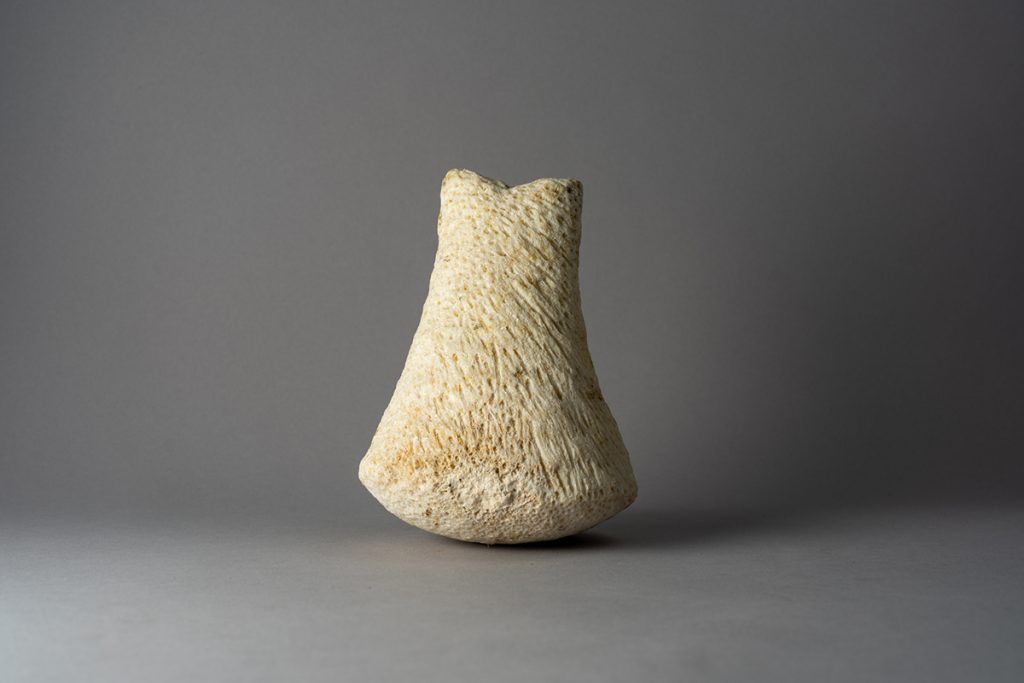
Photo: Courtesy of Bishop Museum Archives /Noel Kenny
For Kenny, her work carries a deep sense of purpose. “I know that the collections here hold so much knowledge and importance for Hawai‘i and the Pacific,” she says. With care and intention, she approaches each photograph with both documentation and preservation in mind. “I think the photos I am taking today will play roles in the future that are beyond my imagination,” she shares. “I am hoping that they will inspire people in Hawai‘i and beyond to connect more deeply with their culture and to be able to access knowledge that might not have been accessible before.”
This story was originally published in our 2026 SUMMER Digital issue, which you can read here.
Krystal Kakimoto is a contributor to HAWAIʻI Magazine.