
*This story was originally published on April 22, 2021, and updated in February 2026.
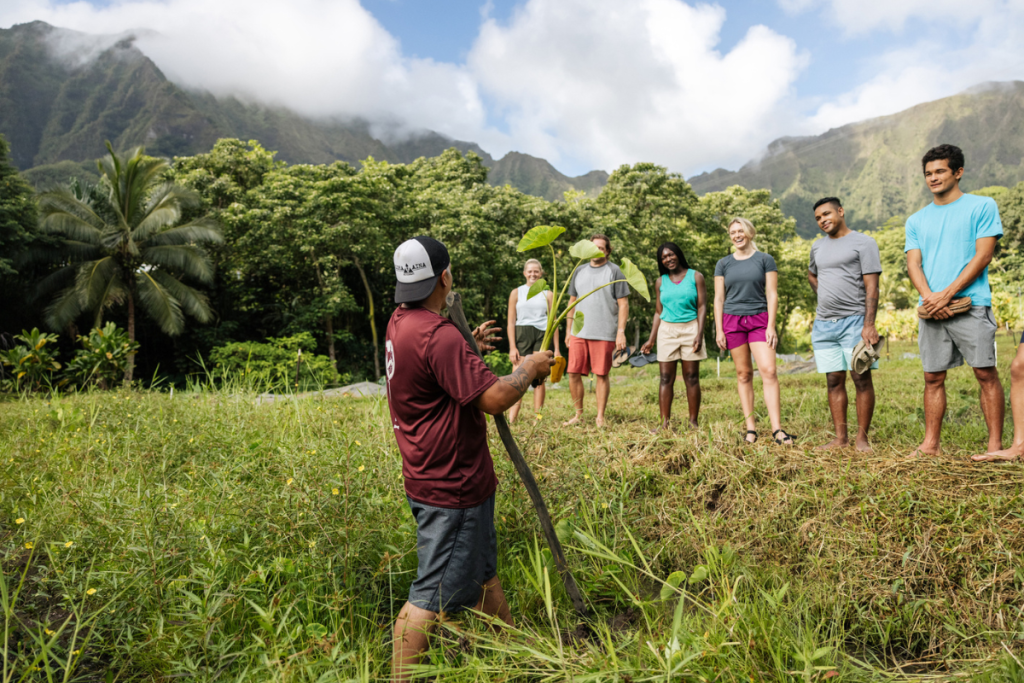
While travel often offers visitors the opportunity to engage with new cultures and broaden their perspectives, it can also take a toll on the environment, from plane rides that burn large amounts of fossil fuels to the prevalence of single-use plastics.
Fortunately, there are many ways that travelers can go “green,” or keep the ecosystem in mind in Hawaiʻi—or any destination.
Here are a few ways to mālama ʻāina.
1. Bring a (Reusable) Bag
Whether you’re off to the beach, headed on a hike or just going for a walk, bring a reusable bag with you. Not only can this act as a trash bag for any waste you make, but it’s also a great place to put trash you find out in public. Lei-Ann Field of the Hawai‘i Visitors & Convention Bureau also recommends emptying your bag in the waste disposal area of wherever you are staying, instead of filling up public trashcans that could overflow.
When you shop for groceries or omiyage (gifts), that reusable bag will come in handy, too. Hawaiʻi was the first U.S. state to ban plastic bags, a policy enacted statewide in 2015. The regulations prohibit businesses from providing plastic bags at checkout. Instead, customers can use paper or reusable bags.
2. Plant a Tree
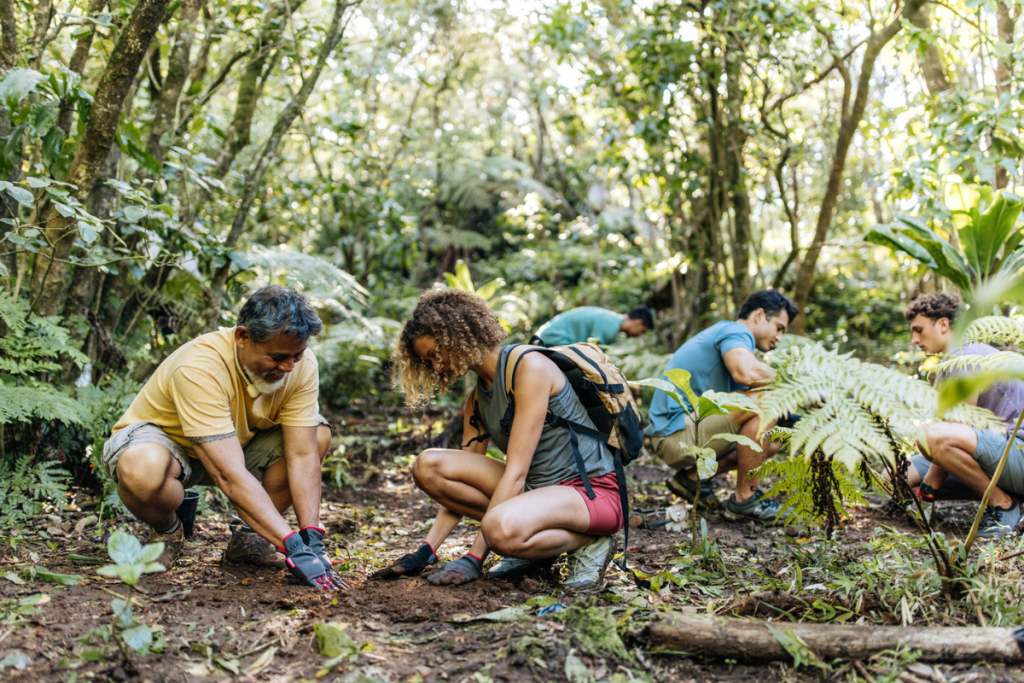
Photo: Hawaii Tourism Authority (HTA)/Heather Goodman
To help offset the large amount of carbon emission that it takes to get to Hawaiʻi, think about planting a tree during your visit. Of course, you can’t just go out to Kapiʻolani Park and plant one—but you can work with certain conservancy groups across the Islands, like Gunstock Ranch on Oʻahu’s North Shore, to help make Hawaiʻi even greener.
3. Connect with the Community by Volunteering
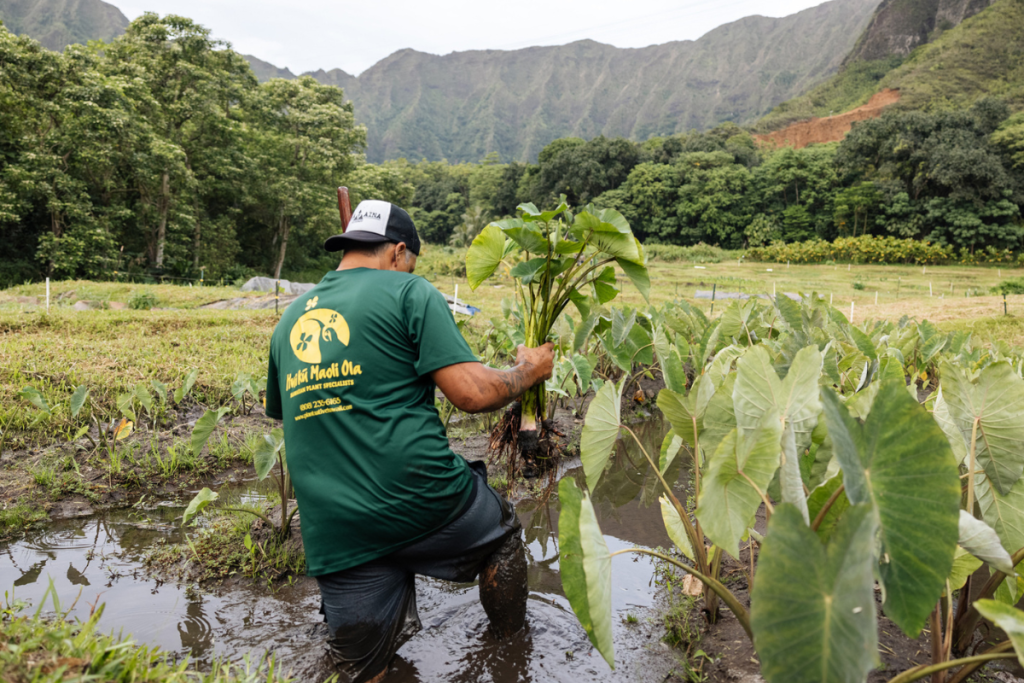
Photo: Hawaiʻi Tourism Authority (HTA)/Heather Goodman
Sometimes we forget that the places we travel to aren’t just vacation spots. Just like anywhere else in the world, Hawaiʻi is home to local communities with their own history, culture and unique sets of needs and challenges.
Offering a few hours of your time can lead to a chance to connect with these local communities. “Volunteering can introduce you to local folks that you would never have had the opportunity to meet,” says Keone Kealoha, executive director of Kanu Hawaiʻi, a local nonprofit that provides tools and opportunities for people to connect with volunteering opportunities. “These potential friendships and memories can even become a defining point of your visit.”
READ MORE: 10 Programs in Hawaiʻi to Help You Start Volunteering
4. Use the Right Kind of Sunscreen
In 2021, Hawaiʻi became the first state in the nation to ban the sale of reef-damaging sunscreens, specifically those that contain oxybenzone and octinoxate, two chemicals that have been scientifically proven to induce coral bleaching, harm and even kill young coral larvae. Of course, you can still bring your own sunscreen into Hawaiʻi, but if you do, be sure to check its ingredient list and make sure it won’t harm the coral reefs that support our underwater ecosystem.
READ MORE: Your Guide to Reef-Safe Sunscreen in Hawaiʻi
5. BYOU (Bring Your Own Utensils)
A sneaky polluter, disposable utensils may seem harmless, but create tons of waste and can end up in our oceans and on our beaches. So cut out the middle man by just bringing your own utensils!
6. Hike Responsibly

Photo: Hawaiʻi Tourism Authority (HTA)/Heather Goodman
To prevent the spread of invasive species and protect native wildlife, only hike on marked trails—those with signage by the city or state, recommends Field. You can go a step further by brushing off your shoes before entering and exiting a hike, which also helps prevent transporting invasive species from one hiking area to another.
7. Eat (and Shop) Local
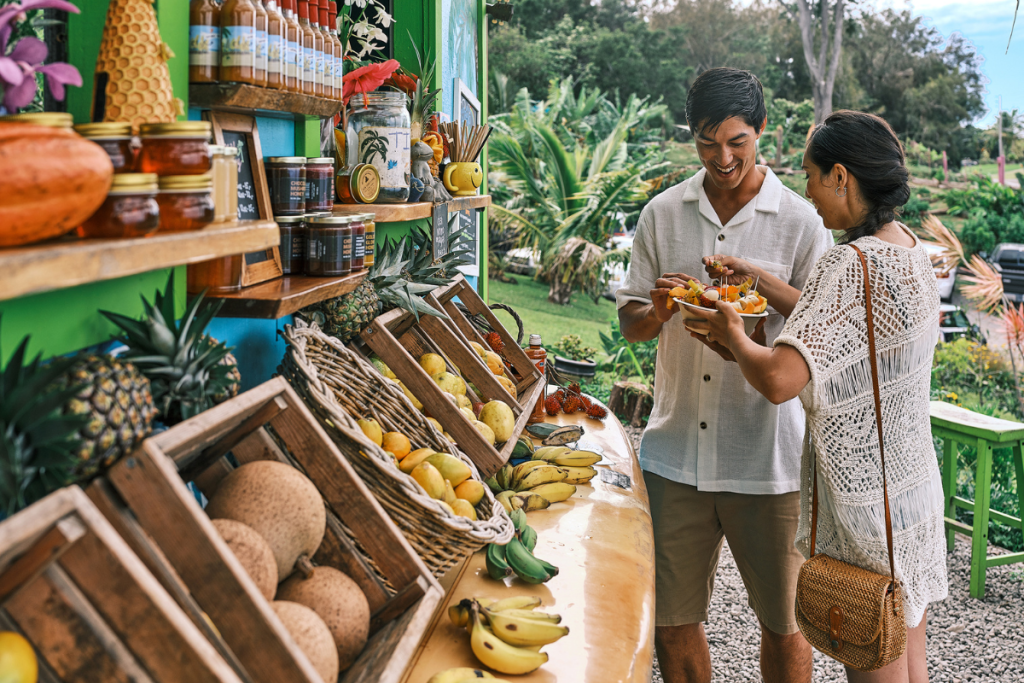
Photo: Hawaiʻi Tourism Authority (HTA)/Ben Ono
Whenever you travel, it is recommended to buy local products and eat at restaurants that support local farms and food producers. Not only will these goods be unique and the food super fresh, you will be supporting the local community. Plus, buying products that have been flown or shipped into the Islands increases their carbon footprint.
8. Learn about Hawaiian History and Culture

Photo: Mallory Roe
The Hawaiian Archipelago thrived as an independent kingdom for nearly a century before being overthrown by American and European businessmen. While the story of Hawaiʻi contains struggles and oppression, it is also filled with tales of triumph and connection among the communities that made the Islands home. From the preservation of the Hawaiian language to rebuilding ancient fishponds, communities in Hawaiʻi are proud of their culture. By learning more about the history of these Islands, you show deep respect for the local communities and traditions here.
READ MORE: 10 Museums to Visit in Hawaiʻi
9. Travel with Aloha
Sometimes, the best thing you can do when looking to travel green is just being aware and traveling with aloha. That means picking up your trash, opting for a Biki or walk instead of driving, buying local, not standing on the reef, staying away from endangered wildlife like turtles and monk seals. Yes, it is a lot to think about, but if you can question your choices, even those that seem insignificant, you could make a world of difference and promote change in not only yourself but in others as well.
READ MORE: 8 Ways to Be a Conscious Traveler in Hawaiʻi


