It’s 8:30 p.m., and I’m lying in bed under a mosquito net staring outside the large screen windows that cover the four walls of the one-room cabin.
I’m in the middle of the Kapoho jungle, deep in Lower Puna on Hawaii Island. I can’t see anything past the dark shadows cast by the forest’s large trees, but, alongside the steady chorus of coqui frogs, I hear drumbeats and people singing.
The owner of the cabin mentioned I would hear a drum circle at the property next door. It happens every Tuesday, he said. And after living off the grid the past two days, I welcome the noise because it means I’m not really as alone out here as it seems.
I booked the cabin as a personal retreat, after finding unique and unusual Hawaii accommodations on Airbnb and deciding to give it a try. The cabin has a sink with filtered water taken from a natural well, a gas-powered stove and a small fridge. The limited electricity is powered by solar panels. There’s also a queen bed, a hammock and a table. The interior is very cute, with many decorative touches, and has all the necessities I need, aside from a bathroom, but the outhouse, outdoor shower and tree out back will have to do.
Puna is one of nine moku (districts) on the island of Hawaii, and it’s a large one—about the size of Kauai. Just south of Hilo, Puna is not heavily populated and it’s not uncommon to find people living off the grid here. Partly, it’s because it lies in the most dangerous Lava Flow Hazard Zones, as designated by the United States Geological Survey—meaning, the land has either been covered by lava after the year 1800, or volcanic activity has taken place near it.
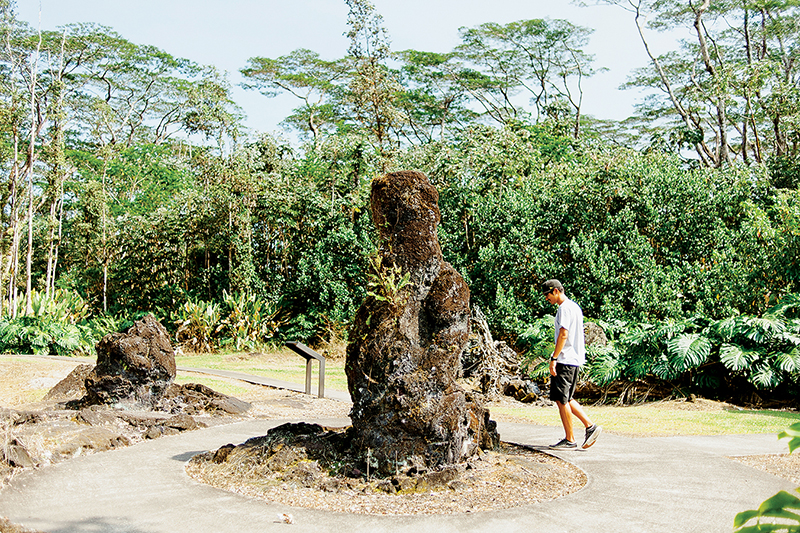
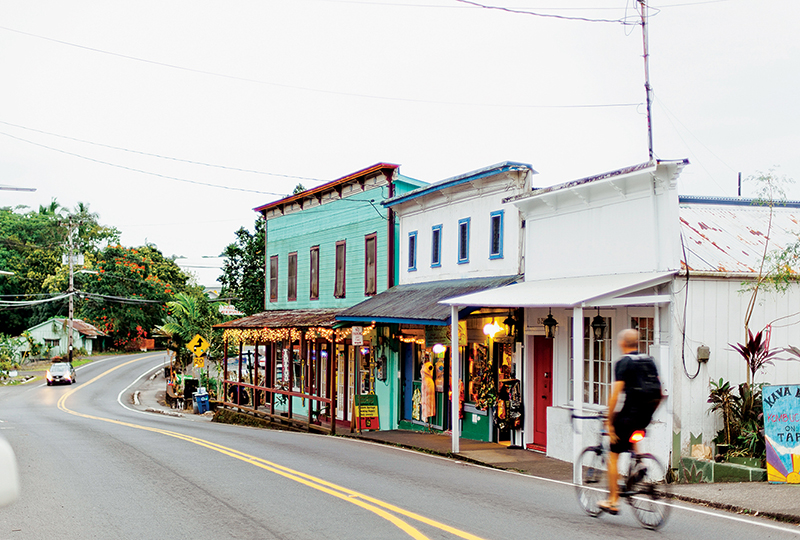
Photo: Megan Spelman
After the quick .7-mile loop trail through the park, I continue on the road to the small town of Pahoa, where there’s a gas station, shops, health food store, Island Naturals Market and Deli, and a few places to eat. I stop for breakfast at Tin Shack Bakery and fall in love with the large colorful space, tables buzzing with people using Wi-Fi and the many fresh-baked breads for sale. I order a large cinnamon roll and a fruit smoothie to go, and, after taking a quick glance at its menu, make a note to come back if I have time the next day.
Back on the road, I drive about an hour toward Hawaii Volcanoes National Park, where I’m hoping to fit in two quick stops: Thurston Lava Tube and Kilauea Iki Crater lookout, which are across the street from each other. I spend two hours at the park, exploring the inside of the cave then glancing at the tiny people hiking across the solidified volcanic crater far below, before reluctantly continuing on my way, because I want to go to Kalapana.
Photo: Megan Spelman
I drive the long, empty road to the remote southeastern section of the island, at times wondering if driving this far away from any visible towns and with spotty cell-phone service was a good idea. At the end of the road, I arrive in Kalapana and find Uncle Robert’s Awa Bar and Farmers’ Market, resembling an open-air food court, along with vendors selling T-shirts and a sign near my parked car telling me I’m about to walk on “new land which was ocean until the lava slowly covered Kaimu Bay in 1990.” I walk over the incredibly large expanse of hardened lava rock, down a red-dirt path toward the ocean, and return back to my car with a newfound understanding and appreciation for the land.
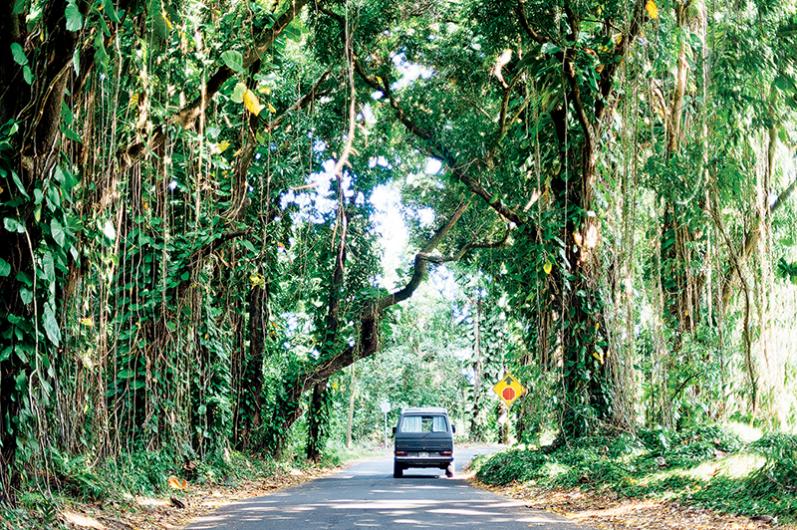
Opting for the coastal route back to the cabin, I then take Red Road (Highway 137) toward Kapoho, not really knowing what to expect but hoping the road isn’t anything like the coastal roads of West and East Maui. Lucky for me, it isn’t. On the two-lane, hilly road, named after the red cinder it was once paved with, I twist and turn under many lush tree canopies and pass oceans and beaches. On the open road, I also drive by convertible cars with tops down and people wearing large sunglasses and big smiles. It’s a fun road to drive and reminds me of a bygone Hawaii I’ve only seen in old photos until now. I already want to do it again.