I feel silly trying to keep my balance in the rain while planting naupaka along a slippery bank. I should’ve worn work boots. But that’s not the only thing I learn on my Saturday outing to the North Shore.
Kapo‘o, also known as Sharks Cove, is a protected marine life conservation district in Pūpūkea, O‘ahu. The area, which includes the adjacent tide pools, is a “no take zone” policed by the Department of Land and Natural Resources. Because of the area’s abundant sea life, it’s also a prime snorkeling spot, and visitors come here in droves. The fact that not everyone is privy to its protection status is why Mālama Pūpūkea-Waimea was founded in 2005—to act as a neighborhood watch for the ocean and to steward the land around it.

Photo: Courtesy of Hawai‘i Alliance of Nonprofit Organizations
According to Denise Antolini, the group’s president and co-founder, the tide pools contain 13 coral species and more than 85 kinds of fish and invertebrates. On the morning I volunteer, dozens of people are wading in them. Antolini says Mālama Pūpūkea-Waimea conducted a study last year that showed a correlation between the number of people entering the tide pools each day and a decrease in fish population. Simply stepping on coral can damage it; when that happens fish are displaced from their habitat, she says.
Contaminated dirt and water that seeps into the ocean from land can also damage coral. About 12 years ago, the organization began planting native coastal plants along the banks of the shoreline to help prevent erosion. This is where volunteers are especially helpful. The area stretches along 80 acres of coastline, and Mālama Pūpūkea-Waimea plans to extend its work around the restroom, shower and parking lot. “We want to have specified pathways [and] put in boardwalking and signage on the pathway, so you know you’re entering something special,” Antolini says.
“There’s no control on the number of people who can currently go in the tide pools…which is a problem,” Antolini says. The last thing Mālama Pūpūkea-Waimea wants is to limit resident access, she adds, but perhaps a system could be implemented, like Hanauma Bay’s, limiting the number of nonresidents visiting each day.
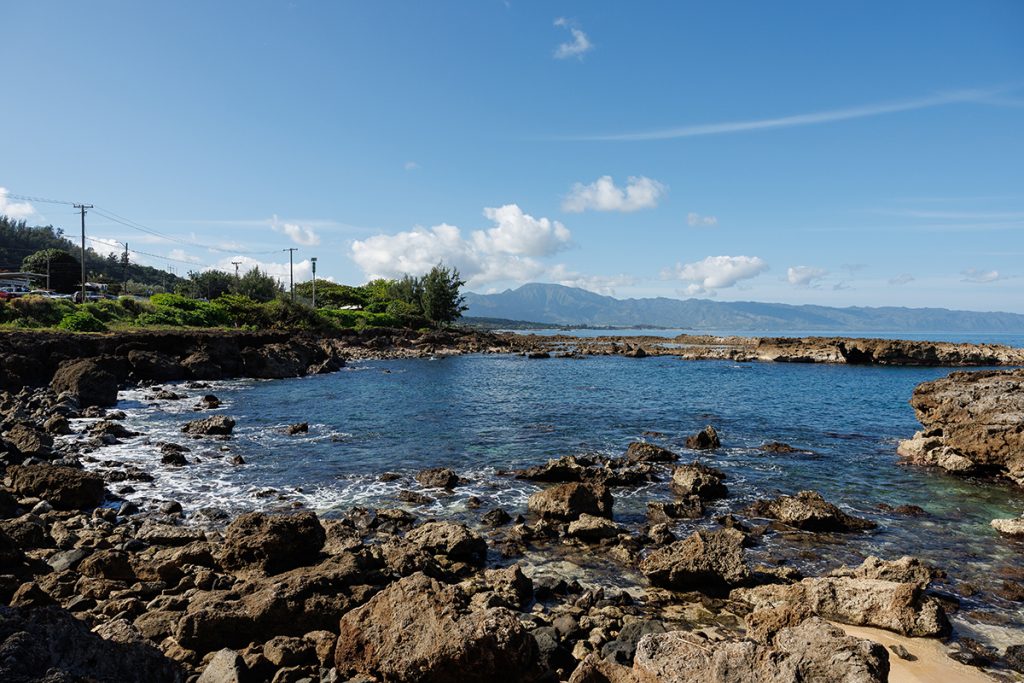
Photo: Courtesy of Hawai‘i Alliance of Nonprofit Organizations
The group’s ocean watch program has already led to a dramatic drop in violations in the area. Most violations are by tourists with small children who don’t realize they can’t bring buckets and nets into the tide pools. But there have also been arrests made among poachers fishing just outside Sharks Cove.
“The whole idea of a marine sanctuary is that it is so abundant that it spills over, and it helps the whole coastline,” Antolini explains. “[Sharks Cove] deserves more care and protection and management. That’s why we do it.”
A typical volunteer workday lasts from 8 to 10 a.m. and involves removing invasive weeds and planting native Hawaiian coastal plants, whose stable root systems hold back erosion. Occasionally, the organization receives small grants to purchase plants and hire temporary contract workers, but all of the work is done by hand without chemicals. And it’s hard work. “We really rely on volunteers to help us with this,” says Jenny Yagodich, director of educational programs and the makai watch coordinator for Mālama Pūpūkea-Waimea.
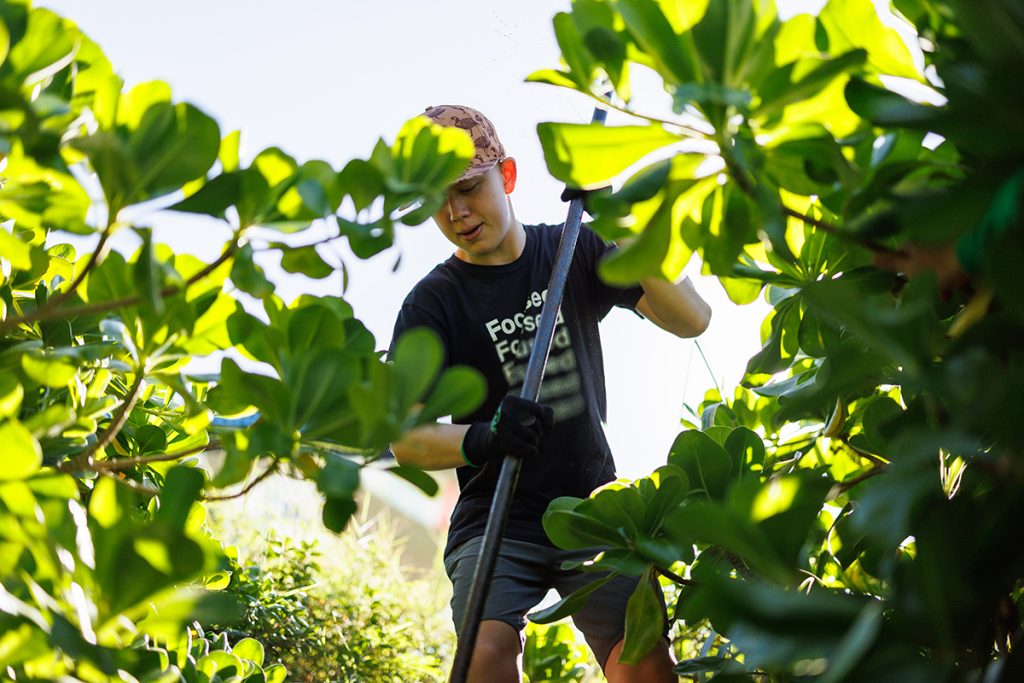
Photo: Courtesy of Hawai‘i Alliance of Nonprofit Organizations
Not only does the group contend with invasive weeds, it also deals with the effects of people trampling through new plants to get to the water instead of using designated trails. “It’s a constant battle,” Yagodich says. “But it’s worth it because we have seen an increase in coral health and a decrease in sedimentation in this area.”
To learn more about Kapo‘o and the adjoining tide pools, consider signing up for a Saturday morning volunteer workday. Information is posted regularly on Instagram on @malama_pupukea_waimea.
This story was originally published in our 2026 SUMMER Digital issue, which you can read here.
Sarah Burchard is a frequent contributor to HAWAIʻI Magazine.