This story was originally published in our SUMMER Digital issue, which you can view here.
On the boggy slopes of windward Haleakalā, a mist-weighted wind bends the canopy of ‘ōhi‘a lehua and kōlea toward the forest floor. Calls of native ‘apapane and ‘amakihi echo above the breeze. As two technicians with the Maui Forest Bird Recovery Project pore over data in their makeshift field research tent, I wonder how the soundscape of this forest has changed over time.
Just two centuries ago, Maui supported at least 13 native forest bird species. Today, only six remain—and two are critically endangered. Across Hawai‘i, dozens of native forest birds have been driven to extinction by habitat loss, predation by non-native mammals and invasive mosquitoes carrying avian diseases. Without intervention by conservation programs like the MFBRP, many birds would continue on a path to extinction.
MFBRP’s work is centered on protecting and restoring Maui’s forest bird populations through research, mosquito suppression and habitat restoration. Today, we’ve trekked into the forest on a routine bird banding and disease sampling outing. However, one of MFBRP’s more ambitious projects is unfolding on the opposite side of Haleakalā. In the ultra-remote Kīpahulu Forest Reserve, an ancient voice has returned to the landscape.
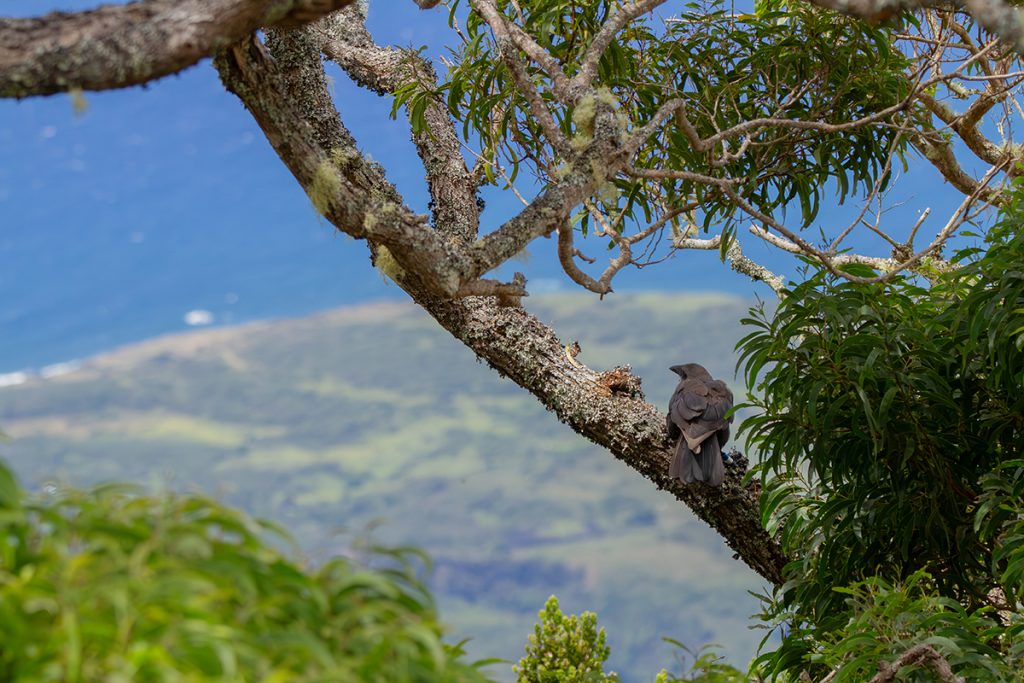
Photo: Courtesy of Maui Forest Bird Recovery Project
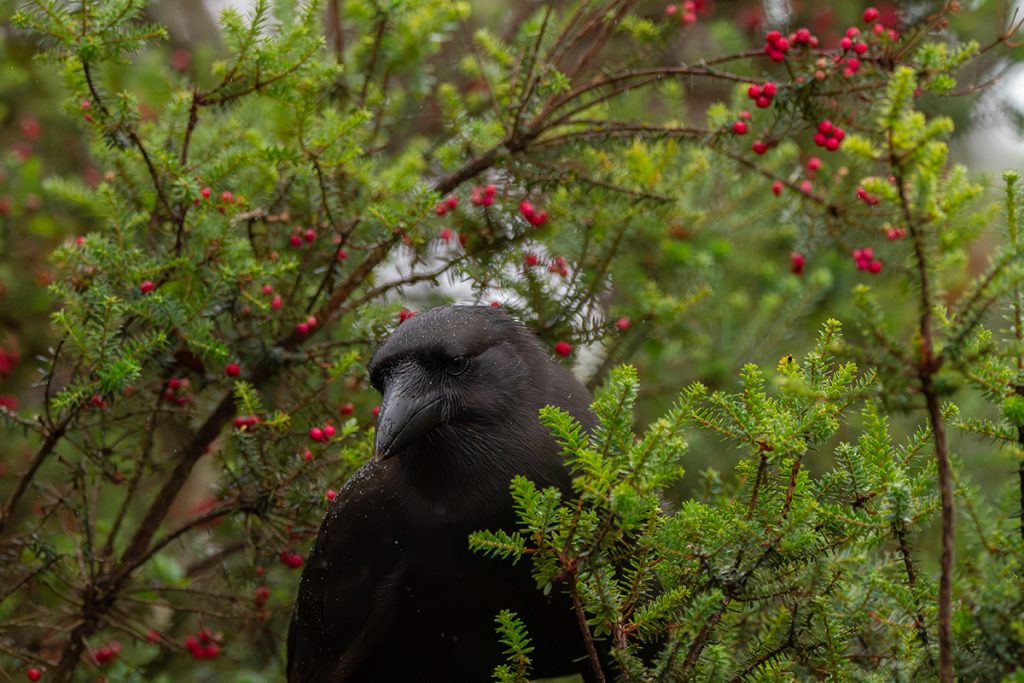
In late 2024, in collaboration with The ‘Alalā Project, MFBRP released a group of five young ‘alalā, or Hawaiian crows, into the Kīpahulu Forest Reserve. ‘Alalā were last seen in the wild in 2002 on Hawai‘i Island, following a sharp decline through the 20th century. In a last-ditch effort to prevent extinction, biologists began a captive breeding program for ‘alalā in 1993.
Known for its clever problem-solving abilities and repertoire of raucous calls, the crow was once a familiar presence in forests across Hawai‘i Island. Ecologically, the ‘alalā was an important seed disperser for endemic plants; culturally, it’s an ‘aumākua species, or ancestral family guardian.
Nearly two years after the birds’ release on Maui, MFBRP says the cohort is adapting to forest life, utilizing native plants and natural foraging behaviors. “It’s especially exciting to see their natural behavior,” says Faith Bellas, ‘alalā field and data technician. “They’re interacting with native plants, eating pūkiawe and ‘ōlapa. Overall, it’s going really well.”
MFBRP technicians visit the forest almost daily to monitor the birds and service their automatic feeders. While the team planned to eventually wean the birds off the feeders, that moment came sooner than expected during the back-to-back Kona low storms in March 2026, when severe weather kept the crew out of the field for several weeks. “After [the storms], we noticed even more foraging behaviors that we didn’t see previously,” says Bellas. “Maybe we just needed that push to realize that they have really innate instincts.”

Photo: Courtesy of Maui Forest Bird Recovery Project
The birds’ success in East Maui is a collective relief for MFBRP and conservation partners, who have spent decades working to return ‘alalā to the wild. Past reintroductions on Hawai‘i Island were unsuccessful, in part due to predation by ‘io, or Hawaiian hawks. “Changes in the forest habitat [on Hawai‘i Island] favored ‘io and diminished the healthy relationship between ‘alalā and ‘io,” says Jessica Eden, MFBRP public relations and education specialist. In 2021, partner organizations selected Maui Nui as the next ‘alalā release site, where ‘io are not present. While ‘alalā are endemic to Hawai‘i Island, fossil records suggest a similar species was once present on Maui. “We needed these birds back on the landscape, but in a relatively safe space,” says Eden. A long-term goal is to eventually return ‘alalā to Hawai‘i Island.
For conservationists, ‘alalā’s return demonstrates that extinction may not be inevitable. “The first time I saw them soaring overhead, I just felt a sense of awe. I was elated,” says Bellas, who also worked with ‘alalā in conservation centers on Hawai‘i Island. “It’s definitely an honor, and it’s really meaningful to be able to see them in the forest.”
Back at the mist-drenched field site, I watch as an ‘i‘iwi nestles against a scarlet ‘ōhi‘a blossom. I’m reminded of the ancient connections between these birds and the forest—the two evolved alongside each other for millions of years, long before the first Polynesians arrived. And while the void left by Maui’s seven extinct species can never be filled, there is hope for Hawai‘i’s remaining species, thanks to groups like the MFBRP.
For more information about the Maui Forest Bird Recovery Project, visit mauiforestbirds.org.